- 👨🏿🚀TC Daily
- Posts
- A Ripple in Flutterwave
A Ripple in Flutterwave
Inside: Chimoney is getting acquired.

Opeyemi Kareem
June 17, 2026

Happy mid-week ☀️
Looking for a job in African tech? We're putting fresh focus on the TechCabal Job Board, where you'll find active openings from startups, fintechs, telecoms, venture capital firms, and other companies across the continent.
We'll update the board every week with new roles and remove outdated listings to keep opportunities current.
Hiring? We'd like to help. Recruiters and hiring managers can submit open roles through this form, and we'll feature suitable roles on the board for thousands of professionals across Africa's tech ecosystem.
Whether you're looking to make your next career move or find the right talent for your team, the TechCabal Job Board is built to make those connections easier.

Get smarter about Francophone Africa with our newsletter, Francophone Weekly—the startups, tech policies, and institutions building the pipelines for ecosystem growth.

regulation
The CBN draws a line in the sand for financial institutions

These days, banks want to be fintech and fintechs want to be banks. Payment companies want to offer wallets, loans, cards, savings accounts, merchant services, and anything else that can generate revenue. Nigeria's Central Bank (CBN) has now stepped in and said, "Everybody, calm down."
Wait, what happened? The regulator has unveiled a set of new rules for banks and fintechs. Some of them are technical, but together they send a message that the CBN wants more visibility into Nigeria's payments industry and less concentration of power. These rules have a compliance deadline of December 2026.
The fintechs may not like this one: In a market where shoppers are making payments on one end, and the traders are collecting payments on the other, the CBN doesn't want one company controlling both. Under the new rules, any institution with more than 25% of consumer payments can't hold more than 15% of merchant acquiring, and vice versa.
That's a notable development because many fintechs have spent the past few years expanding beyond their original businesses. Paystack acquired a microfinance bank, while Flutterwave acquired open banking startup Mono and got an MFB licence. Everybody is trying to move into somebody else's territory, but the CBN is drawing boundaries around how far expansion can go.
There's also the data angle: The regulator is also telling companies to keep payment data in Nigeria. While you wouldn't notice anything different when you open your banking app from January 2027, some fintechs and banks may need to move infrastructure behind the scenes and review ownership disclosures.
Why should you care? Because Nigeria's payments ecosystem processed ₦1.2 quadrillion ($876 billion) last year, which is huge. The CBN is trying to regulate the systems that millions of Nigerians rely on every day, and the regulator seems determined to make sure that no single company becomes the landlord of Nigeria's digital economy.


We Have Secured the Bank of Ghana EPSP Licence.
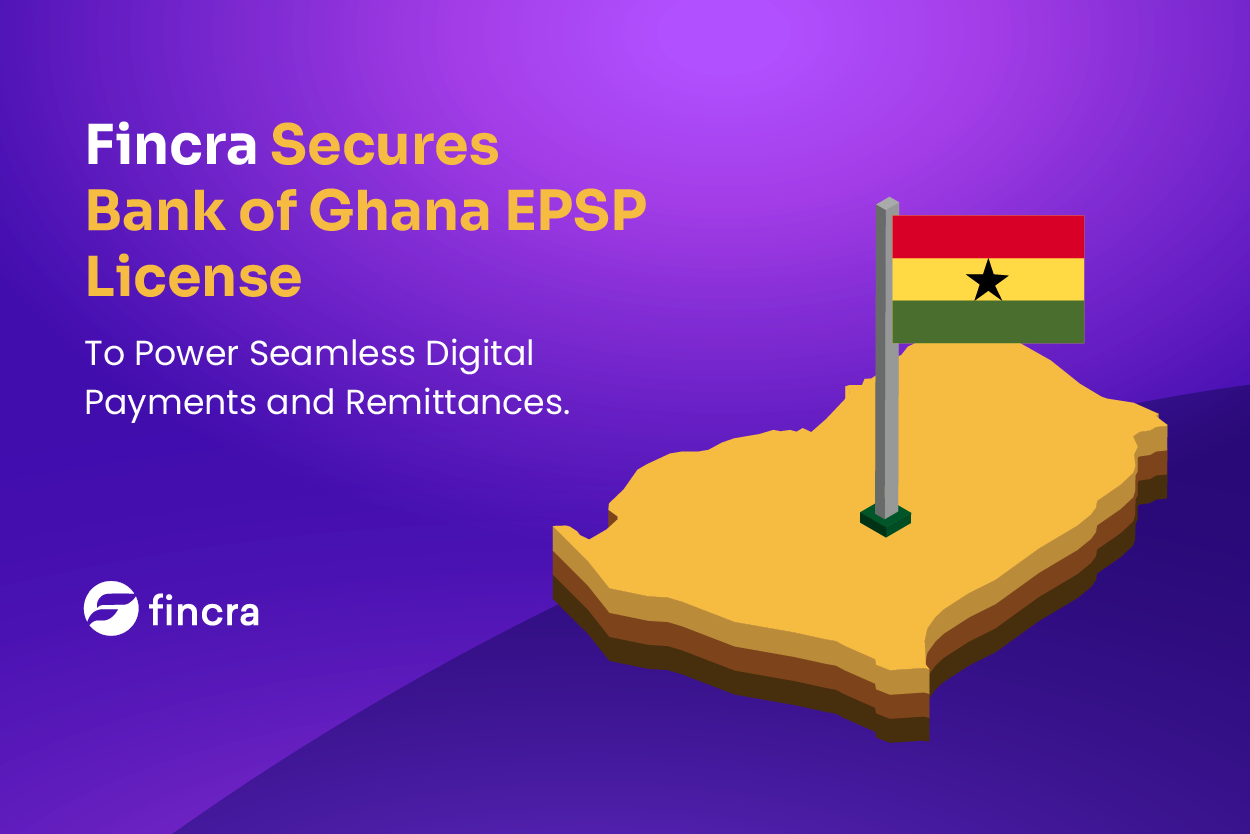
Fincra has officially secured its Enhanced Payment Service Provider licence. This regulatory milestone authorizes Fincra to directly collect, process, and settle payments in Ghanaian Cedis, offering a highly streamlined financial pipeline for businesses operating within the region. Start here.
companies
Flutterwave raised money from Ripple. What does that mean for you?

Moving money across borders in Africa can be weirdly difficult. A freelancer in Lagos who gets paid by a client in London or a Kenyan business that buys inventory from China. Somehow, in big 2026, moving money between all these places could still involve multiple banks, currency conversions, waiting periods, and high transaction fees. Flutterwave thinks stablecoins can fix that.
What's this news about raising money? The fintech giant has raised a Series E funding round from Ripple, the US payments company behind the XRP Ledger a blockchain network designed for payments, and RLUSD, a dollar-backed stablecoin. The deal values Flutterwave at $3.25 billion, up from the $3 billion valuation it achieved in 2022.
As part of the deal, Ripple's technology and stablecoin infrastructure will plug directly into Flutterwave's payment network. That means merchants and consumers using Flutterwave will be able to hold, send, receive, and convert money using RLUSD alongside traditional payment methods.
What does that have to do with you? If you're a freelancer, exporter, importer, remote worker, or business owner, the promise is faster settlements and potentially lower transaction costs. Stablecoins are gaining popularity because they combine some of the speed of crypto with the relative stability of the US dollar.
Why is this big news? First, large late-stage funding rounds have become rare in Nigeria. The startup ecosystem hasn't seen many headline-grabbing Series E rounds since Andela's $200 million raise in 2021. Also, it seems like Flutterwave is gathering stablecoin partnerships like infinity stones. Over the past year, the company has linked up with Circle, Polygon, Turnkey, Nuvion, Tempo, and now Ripple, suggesting that Flutterwave is preparing for a future where moving stablecoins is as normal as sending a bank transfer.
Naira Life 2026 is here!

The theme for this year's Naira Life Conference by Zikoko is "All About Wealth."
Join 2,000+ in Lagos on August 22 for a day of practical money conversations and workshops designed to move you from simply earning an income to building lasting wealth. Get 15% off early bird tickets.
companies
Chimoney, the startup that died last month, just got a buyer

Chimoney, the Nigerian-Canadian payments startup that announced its shutdown in May, is getting acquired. Founder Uchi Uchibekeannounced on Monday that Chi Technologies, Chimoney's parent company, has signed an agreement in principle with CapitalSage Vantage Limited. If it closes, Chimoney becomes CapitalSage's first payments entity in Canada.
What the deal is: Picture a company closing down the right way.Investors told in February, customers told in April, every wallet balance refunded on schedule through August, developer migration guides published so nobody's app broke overnight. That's what Chimoney did. It also kept a hard-to-getCanadian Payment Service Provider (PSP) licence in its back pocket on the way out, just in case. Turns out "just in case" arrived four weeks later.
Why now: CapitalSage wanted into the Canadian payments market and didn't want to spend months winning a licence from scratch. Chimoney had one sitting right there, attached to a brand that — thanks to how it handled its own shutdown — still had a good name.
Someone's about to be happy: CapitalSage skips the regulatory queue entirely. Uchibeke gets to walk away clean, reputation intact, and is alreadybuilding something new, an AI product called APort.
connectivity
Egypt just signed a $400 million deal to build a new data centre

Egypt's telecom regulator, theNational Telecommunications Regulatory Authority (NTRA), signed a licencing deal with Hassan Allam Digital Infrastructure on Monday to build and run a $400 million data centre in the country.
The deal: Every photo you save, every chatbot question you ask, every show you stream — none of it actually lives in "the cloud." It lives in a building exactly like this one: rows of humming servers that someone has to build, power, and keep cool. The country that hosts the building gets the jobs, the investment, and the bragging rights of being the region's tech landlord.
Why now: Egypt's been quietly angling for that landlord status for years—cheap power, solid undersea cable links, andincentives generous enough to make global tech companies look twice. Hassan Allam Digital Infrastructure, the construction arm ofone of Egypt's biggest conglomerates, is exactly who you'd call if you needed something this large built fast and built right.
It’s now a storage business. Egyptian businesses are currently paying to store their data abroad and dealing with the lag that comes with it. A serious local option just got closer to existing.
Zoom out: Gabon justswitched on its first national data centre. Kenya, Nigeria, and South Africa are all building too. The continent's data centre race is now about who finishes building first.
Showcase Your Brand at Moonshot by TechCabal

Founders. Investors. Policymakers. Enterprise leaders. Moonshot 2026 brings together the people shaping Africa’s technology ecosystem across AI, commerce, climate, enterprise, and culture. Spotlight your brand today.
CRYPTO TRACKER
The World Wide Web3
Source:

Coin Name | Current Value | Day | Month |
|---|---|---|---|
 Bitcoin Bitcoin | $65,834 | - 0.35% | - 15.54% |
| Ether | $1,794 | + 1.77% | - 15.33% |
| XRP | $1.21 | - 0.50% | - 12.44% |
| Solana | $73.69 | - 0.02% | - 13.11% |
* Data as of 06.42 AM WAT, June 17, 2026.
Opportunities
- The Stellar Development Foundation has launched its first accelerator programme targeting Europe, the Middle East, and Africa, partnering with blockchain venture firm CV Labs to back ten early-stage startups building payments infrastructure, tokenised assets, and decentralised finance applications. The 12-week programme, beginning August 2026, will run primarily remotely but includes an on-site component in Cape Town and concludes with a demo day at Stellar's Meridian conference in Lisbon in October. Each selected startup can receive up to $150,000 in XLM, Stellar's native token, in initial funding. Apply by July.

Written by: Opeyemi Kareem and Zia Yusuf
Edited by: Ganiu Oloruntade
Want more of TechCabal?
Sign up for our insightful newsletters on the business and economy of tech in Africa.
- The Next Wave: futuristic analysis of the business of tech in Africa.
- Francophone Weekly by TechCabal: insider insights and analysis of Francophone’s tech ecosystem
P:S If you’re often missing TC Daily in your inbox, check your Promotions folder and move any edition of TC Daily from “Promotions” to your “Main” or “Primary” folder and TC Daily will always come to you.

Did today's TC Daily help you understand something new? |