- 👨🏿🚀TC Daily
- Posts
- Crypto averts Catastrophe

Opeyemi Kareem
October 22, 2026


Good morning. ☀️ ️️️
Africa’s unemployment rate looks relatively low by global standards. In 2025, the continent’s rate stood at 6.3%. But that figure tells only part of the story. More than a third of employed Africans live in working poverty; they are employed but live below the poverty line of $2.15 a day. Most workers are informally employed, and fewer than one in five people have social protection coverage. Read the article on TechCabal.
Moonshot 2026 is now six days away, and all tickets are still 30% off until October 24.Get your Moonshot ticket now.
One more thing: we’re still collecting feedback on TC Daily. Tell us what you love, what you skip, and what you want more of. Share your thoughts here.
Let’s dive in.

Read smart insights about Francophone Africa's tech ecosystem—weekly.

regulation
South Africa is rethinking its proposed cross-border crypto rules

South Africa wanted to bring cross-border crypto transfers under the same controls it uses to monitor money leaving the country. The draft rules would have required people moving crypto offshore to use authorised crypto service providers, stay within existing foreign exchange (FX) allowances, and have those transactions reported to the South African Reserve Bank (SARB). Companies would not initially have been allowed to move crypto offshore.
But the government is rethinking it. On Wednesday, Finance Minister Enoch Godongwana said the National Treasury had received “thousands of comments” on the proposals and would take a different approach. Instead of relying on pre-approvals, the government now wants to focus on whether transactions are legitimate and comply with tax rules. A revised draft will be published for another round of public input.
Between the lines: The rethink follows months of organised pushback from South Africa’s crypto industry. In September, VALR, Luno, AltCoinTrader, and EasyEquities formed a coalition called ‘Catastrophe’ to oppose rules they said treated crypto payments more harshly than equivalent bank transfers. Their biggest objection was that it would shut out exchanges from using crypto, including stablecoins, for cross-border payments that would otherwise be legal through the banking system. GoTyme Bank, part of Tyme Group, which was valued at $1.5 billion in 2024, joined the coalition later that month. The industry argued that regulation should govern the transaction and its risks, rather than discriminate according to the technology used to move the money.
Explain like I’m new here: South Africa already limits how much money individuals and companies can move out of the country. For individuals, the limit is R2 million ($122,280) per calendar year under the single discretionary allowance, with another R10 million ($611,360) available under the foreign capital allowance if they obtain tax approval. Larger transfers require additional approvals.
The government wanted to bring crypto transfers under its FX control system, partly because stablecoins and other digital assets can move across borders without passing through the traditional banking system. The draft rules would have brought crypto providers into that control system and barred businesses from using them for certain cross-border payments.
What will happen next? Godongwana said the government wants to move away from pre-approvals and instead assess transactions for legitimacy and tax compliance, while taking guidance from the Financial Stability Board. Treasury and SARB have not yet published the revised approach, so the details are still to come. Consultations on a revised draft are expected, giving crypto companies another chance to weigh in before the rules return.


Upgrade your business today

Pay with OPay is live on Fincra. Customers approve payments straight from their OPay wallet, and you get confirmation back on your site. Available now for NGN collections!Upgrade your business today with Fincra pay with opay.
companies
Kenyan investors buy KCB as foreigners cash out
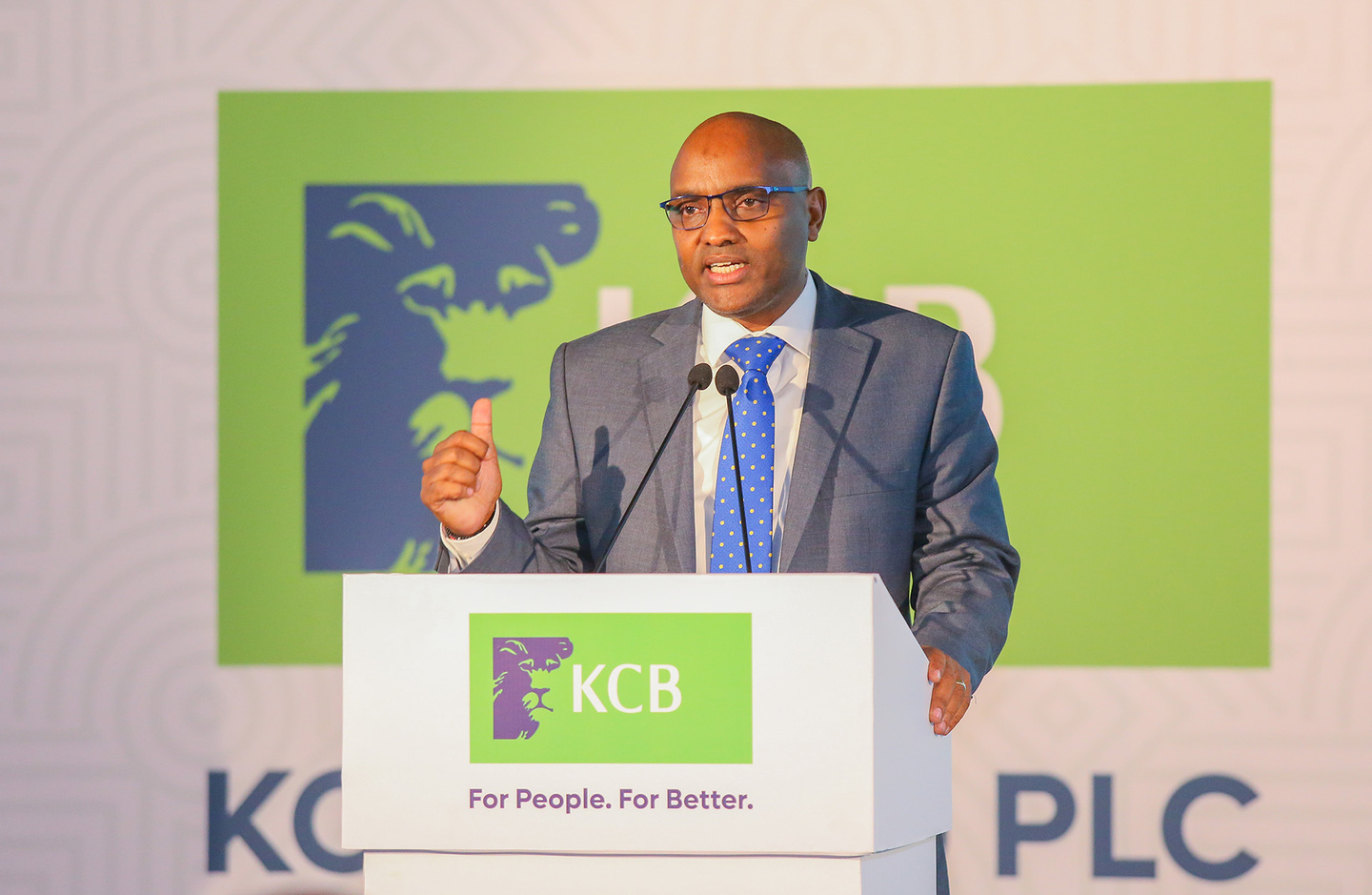
Foreign investors are cutting their stakes in KCB Group, one of East Africa’s largest banking groups. Kenyan investors are buying almost exactly what they are leaving behind.
What happened? Foreign shareholders sold 23.6 million KCB Group shares in the three months to September, cutting their stake in Kenya’s largest bank by assets from about 8.8% to 8.02%. At Wednesday’s opening price, the shares were worth about KES 2.1 billion ($16.2 million). Local investors added nearly the same number.
Most of the buying came from Kenyan institutions, whose ownership rose to 47.33%. Individual investors also increased their holdings slightly to 24.87%. The Kenyan government separately owns 19.76% of KCB.
Explain like I’m new here: This does not necessarily mean foreign investors have suddenly lost faith in KCB. Its share price has risen more than 30% over the past six months and traded as high as KES 99.25 ($0.76), allowing early investors to cash in. KCB has produced strong numbers: profit before tax rose 20.8% in the first half of 2026, while its interim dividend jumped 50% to KES 3 ($0.023) per share.
Between the lines: The more interesting part is who could absorb the selling. Kenyan pension funds, institutions, and retail investors bought KES 2.1 billion ($16.2 million) worth of shares, so foreigners no longer had to be the marginal buyer. After years of worrying about foreign capital leaving, domestic money is becoming capable of owning more of its biggest companies.
KCB makes the longer trend particularly clear. Foreign investors owned 29.25% of the bank at the end of 2017. Their stake was 8.88% at the end of March.
Zoom out: Foreigners have also been taking profits across other large Nairobi-listed companies this year. The question for the Nairobi Securities Exchange (NSE) is no longer whether foreign money returns. It is how much of the market local capital can carry if foreign participation declines.
Ten years of telling African tech stories.

Class of 2016, stand up! Meet the storytellers behind a decade of storytelling for African tech. 230+ startups, VCs, and more. From first cheques to unicorns. Have a story to tell? Let’s make it count. #TheWimbarts
ride-hailing
Bolt takes its EV push to Johannesburg

Electric vehicles (EVs) are having a busy week in Africa. Yesterday, Spiro, Africa’s most-funded e-mobility company, launched its first 100 bikes in Accra, Ghana. Now, Bolt is giving South Africa’s EV market another push from the commercial transport sector.
What happened? Bolt, the ride-hailing giant operating in over 50 countries, has launched its Electric Vehicle category in Johannesburg. The category is for electric cars available for rides through the Bolt app. For the Johannesburg rollout, Bolt is working with the South African Meter Taxi and E-Hailing Association (SAMTEA), an affiliate of the South African National Taxi Council (SANTACO), and Chinese EV maker BYD. SAMTEA will own and manage the EV fleet operating on Bolt's platform. Bolt targets 500 EVs across South Africa by December 2026.
Explain like I'm new here: Bolt first launched the EV category in Cape Town, South Africa, in May, partnering with fleet manager YugoRide to deploy electric cars. South Africa isn’t Bolt's first electric experiment either. In Kenya, Bolt said in February that 5,808 EVs were operating on its platform—about 23% of the country's estimated EV fleet—at the time. In Nigeria, it has also experimented with electric mobility, including a three-wheeler pilot in Lagos in 2025.
What does this mean for ride-hailing? The immediate question for riders is whether choosing an electric car will cost more. Bolt has not said that its EV category will carry a premium over its other ride categories, so there is no basis yet to say that an electric Bolt will be cheaper or more expensive for passengers. For drivers, an EV could cost less to run because it does not need petrol and generally has fewer components that require regular maintenance.
Bolt is entering a growing South African EV market; the country recorded 16,716 new-energy vehicle sales in 2025. With SAMTEA managing the fleet and BYD supplying EV expertise, Bolt believes electric cars can move beyond a niche option and become a practical part of South Africa’s everyday ride-hailing market.
Don't miss Moonshot 2026 for anything in the world!

True scale demands moving beyond surface-level integrations to robust execution. We’ve filtered the noise out of Moonshot 2026, optimising the conference strictly for high-calibre connections between startup founders, global financial operators, enterprise leaders and individuals rewiring Africa’s technical frameworks. Join us on October 28 & 29, 2026. Get your ticket.
streaming
Disney is using Netflix to sell Disney+ originals

Disney, the media giant, spent years pulling its films and shows off rival platforms to make Disney+, its owned streaming platform, more valuable. Now, it is reversing that exclusive strategy and putting some of those titles back on Netflix.
What happened? Disney has started licencing selected titles to Netflix in South Africa and other markets. All five Ice Age films and the first two seasons of Percy Jackson and the Olympians went live on Netflix on October 4, each with a three-month promotional window. The timing is deliberate:Percy Jackson season three premieres on Disney+ on November 20, while a new Ice Age film lands in cinemas in February 2027. The company said more titles are coming, including Will Trent, Tracker, Soul, Elio, and Raya and the Last Dragon.
Explain like I’m new here: When Disney launched Disney+ in 2019, it pulled much of its content away from Netflix and other platforms because exclusivity was part of the sales pitch. If viewers wanted Disney shows, they had to subscribe to Disney. But older films and earlier seasons eventually become less useful at attracting new subscribers.
Licencing them changes the maths. Disney can earn money from Netflix for content it has already paid to produce, while using Netflix’s much larger audience to introduce people to franchises whose newest instalments still sit on Disney+ or in cinemas. Disney+ currently has about 131.6 million global subscribers, according to Statista, compared to Netflix’s 325 million. In South Africa, the gap is wider; Netflix has 1.3 million subscribers, while Disney+ records just over 118,000.
Between the lines: Disney is not giving Netflix the crown jewels. The newer releases stay on its own platforms. Netflix gets enough of the back catalogue to create interest, while Disney keeps the part most likely to convert that interest into subscriptions or cinema tickets.
South Africa makes the strategy especially interesting. In May, Disney+ raised its Premium price from R159 ($1.22) to R179 ($1.38) monthly, while Showmax shut down in April. Disney has fewer local streaming rivals, but it still has to convince people that another monthly subscription is worth paying for.
Zoom out: The streaming wars are becoming less about locking every title behind one wall. A library only creates value if people watch it. Disney has realised that, sometimes, the best place to advertise Disney+ is Netflix.
CRYPTO TRACKER
The World Wide Web3
Source:

Coin Name | Current Value | Day | Month |
|---|---|---|---|
 Bitcoin | $82,747 | - 0.06% | - 3.19% |
| Ether | $2,441 | - 0.21% | - 10.57% |
| XRP | $1.34 | + 1.04% | - 10.86% |
| Solana | $105.39 | - 0.57% | - 9.47% |
* Data as of 06.08 AM WAT, October 22, 2026.
Opportunities
- Applications open for Her Startup's second cohort: Her Startup is accepting applications from women-led tech startups across Africa for its 2026/2027 accelerator programme. Ten selected founders will receive 12 weeks of training, monthly stipends, mentorship, and an opportunity to access funding. Applicants must be women aged 18–35 running tech-enabled businesses that have operated for at least six months and generate at least $500 in monthly revenue. Applications close October 26. Apply here.

Written by: Emmanuel Nwosu and Yemi Kareem
Edited by: Emmanuel Nwosu & Ganiu Oloruntade
Want more of TechCabal?
Sign up for our insightful newsletters on the business and economy of tech in Africa.
- The Next Wave: futuristic analysis of the business of tech in Africa.
- Francophone Weekly by TechCabal: insider insights and analysis of Francophone’s tech ecosystem
P:S If you’re often missing TC Daily in your inbox, check your Promotions folder and move any edition of TC Daily from “Promotions” to your “Main” or “Primary” folder and TC Daily will always come to you.