- 👨🏿🚀TC Daily
- Posts
- Glovo serves up Nairobi
Glovo serves up Nairobi
Inside: South Africa’s IT agency gets new board.

Emmanuel Nwosu
May 11, 2026


Welcome to another week.☀️
Yvon Sana Bangui, the Governor of the Bank of Central African States (BEAC), caught my attention last week when he spoke about stablecoins. And, well, I’m a sucker for stablecoins.
At a regional central banking conference in Dakar, he reportedly said the six-country Central African Economic and Monetary Community (CEMAC) bloc would only allow a stablecoin pegged one-to-one to the CFA franc and issued by the central bank itself, effectively ruling out dollar-backed stablecoins in the region.
It shows regulators, wary of dollar stablecoins, are moving to protect monetary sovereignty and foreign exchange reserves. What fascinates me is what happens if this approach spreads: first, how regulators build the technical muscle to run these systems; second, the quiet move away from central bank digital currencies (CBDCs) toward locally issued sovereign stablecoins.
—Emmanuel
Get smarter about Francophone Africa with our newsletter, Francophone Weekly —the startups, tech policies, and institutions building the pipelines for ecosystem growth.

Food delivery
Glovo has a new head office in Nairobi, Kenya

On May 7, Glovo co-founder Sacha Michaud flew to Nairobi, cut a ribbon to a new office, and announced plans to invest KES 10 billion ($77.6 million) into the company's Kenyan operations by 2030.
The new office, with 600 employees, is a significant physical commitment to Kenya, where Glovo, the food delivery company based in Spain, operates across 12 Kenyan cities. In 2025, the startup said it recorded40% order growth and had generated KES 20 billion ($155.3 million) for local businesses since it entered Kenya in 2019.
Here’s where it gets head-scratching: Two weeks ago, during its Future of Commerce 2026 summit in Lagos, Glovo Nigeria’s general manager, Reni Onafeko, said the country is Glovo’s fastest-growing market, delivering 38 million items in 2025, nearly doubling partner value year-on-year, and investing over ₦37 billion ($27,000) in the market since entering in 2021. Glovo's Nigerian operations initially ran out of a co-working space in Victoria Island, Lagos, in 2021.
Between the lines: This isn't necessarily a contradiction; it's corporate geography. Nairobi's infrastructure, talent density, and business environment make it a more natural base for continental operations than Lagos.
Nairobi may be seen as the preferred base for multinationals running continental operations: Microsoft, Bolt, and M-KOPA have set up major hubs in Kenya and run their African operations from there.
Zoom out: Glovo exited Ghana in 2024, proving it is willing to cut markets that don't perform. Nigeria performs. The question its operators should be asking is: what does it take for the market that built your African growth story to get the infrastructure that reflects it?


3i Africa Summit 2026
Doing business in African markets? Fincra's financial infrastructure gives your business reliable payment rails across 20+ markets. Start here.
Fintech
Egypt's Valu is expanding into SME financing
Valu, an Egyptian fintech startup that provides buy-now-pay-later (BNPL) services, has received regulatory approval from the country’s Financial Regulatory Authority (FRA) to launch a dedicated small and medium enterprises (SME) financing business.
It will allow Valu to extend financing directly to businesses, including working capital loans, inventory financing, operational cash flow support, or short-term credit that helps merchants keep their businesses running.
The 'missing middle' is why it matters: Africa has a financing problem known as the “missing middle.” Small businesses often have access to microfinance and mobile money lending, while large corporations can secure bank loans and institutional funding. But SMEs face a funding gap estimated at over $330 billion. Valu, following its 2025 public listing on the Egyptian Exchange (EGX), is betting that fintech infrastructure and merchant data can help close part of that gap faster than traditional banking systems have managed to do.
The coming IPO: Valu went public in June 2025 after listing 20.5% of its shares on the country’s stock exchange, becoming one of Egypt’s significant fintechs to do so, after Fawry. Valu stock, now trading at EGP 12.89 ($0.24), is up 37% year-to-date as of Friday’s market close.
Valu already operates across consumer finance, investment products, prepaid cards, merchant services, and financing tools. SME lending adds another layer to that ecosystem strategy, allowing it to compete with players like Fawry and MNT Halan, which already offer lending services to SMEs.
PalmPay - Built for Ambition. Built for You.
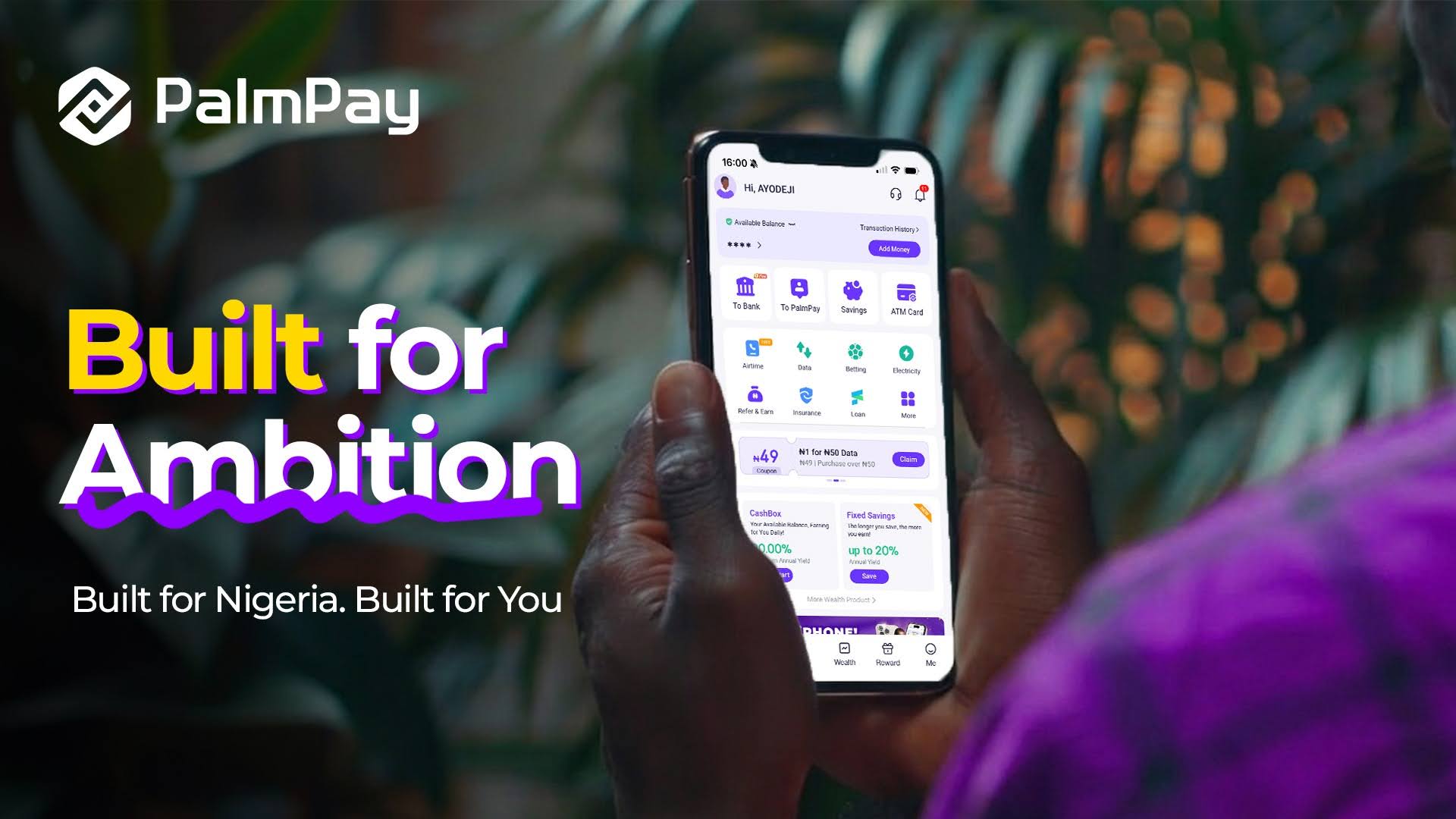
PalmPay is Built for Ambition. Built for Nigeria. Built for You. With over 35 million users and a 99.9% transaction success rate, PalmPay is making digital banking safer, simpler, and more reliable for everyday Nigerians. Download the app to learn more.
Government
South Africa just appointed a new board to its government IT agency

If you’ve ever waited hours in a government office queue because the ‘system was down,’ there was usually one type of organisation at the centre of it: the government information technology (IT) agency.
South Africa has one called the State IT Agency (SITA), mandated to procure and manage IT projects on behalf of every government department. On May 8, the South African Cabinet approved a new permanent nine-member board to run the agency, chaired by Professor Stella Bvuma, ending more than two years of leadership chaos.
That chaos began when the former minister, Mondli Gungubele, fired seven SITA board members in a salary dispute in 2023, triggering a court battle that left the agency without stable leadership or a functioning executive team for the better part of three years.
The chaos was not minor. SITA had no permanent board, no permanent managing director, a 54% executive vacancy rate, and a procurement backlog that the Auditor-General (AG), Tsakani Maluleke, flagged as a systemic risk. The AG's report counted R12.1 billion ($745 million) in failed public IT projects on SITA's watch.
As we analysed on TC Daily in April, South Africa is now pushing a three‑year overhaul of its IT agency to fix stalled government projects.
State of play: SITA is broken and the new board has to fix it. But while they're trying, the government is already making it easier to bypass SITA entirely, and Parliament is debating whether it's even worth keeping. They have to prove SITA's value before the decision to sideline it permanently is made for them.
Zoom out: South Africa's broader digital ambitions, the digital ID, the e-government push, and the Home Affairs modernisation, all sit downstream of whether this agency can be fixed. A new board is a necessary condition. It is nowhere near a sufficient one.
Moonshot is back!

Moonshot 2026 is coming! Join us at the National Theatre, Lagos on October 28 & 29 for two days of tech and innovation. Grab your early bird tickets now and get 15% off.
TECHCABAL 4.0
TC Insiders are reading something you're not. Gated exclusives and deeper analysis—available only to Insiders. Free to join.
Telecoms
Nigeria is becoming Airtel Africa’s money-maker

Airtel Africa, the telco that operates in 14 African countries, in its latest report, has revealed that Nigeria is now its second-biggest market by revenue earned per subscriber.
Airtel grew its average revenue per user (ARPU) in Nigeria by 41.18%, nearly seven times faster than Francophone Africa (6.25%) and almost nine times faster than East Africa (4.76%), making Nigeria the standout growth market across all of Airtel Africa's regions.
The ARPU measures how much money a telecom operator earns from each subscriber over a period of time. If millions of people are buying data, making calls, and subscribing to services, ARPU indicates whether the company is generating enough revenue from those users to cover costs.
The mobile money problem: While Nigeria is becoming stronger in telecom revenue, it remains weak in mobile money. In Kenya, Airtel Money has slowly been chipping away at M-PESA’s dominance. Nigeria, however, tells a very different story. The country contributed less than 1% of the $1.36 billion generated by Airtel Africa’s mobile money business, with 2.7 million mobile money users, compared to 40.9 million in East Africa and 10.5 million in Francophone Africa.
Part of the problem could be structural. Nigeria’s financial ecosystem already has banks, fintechs, and payment startups aggressively competing for users, unlike East Africa, where telecom-led mobile money has long become dominant, given M-PESA’s success.
The postponed IPO: Airtel had previously planned to list its mobile money arm in London, hoping to unlock value from its fintech arm. However, the public listing was postponed to H2 2026 after market uncertainty triggered by the Middle East conflict.
Zoom out: Airtel’s ARPU run in Nigeria matters because things looked rough recently. In 2025, Nigeria lost over one million Internet users within six months as economic pressure and regulatory bottlenecks affected subscriber activity. Now, a stronger ARPU suggests the industry is stabilising again.
80% faster. Nigeria's first FlexSteel pipeline.
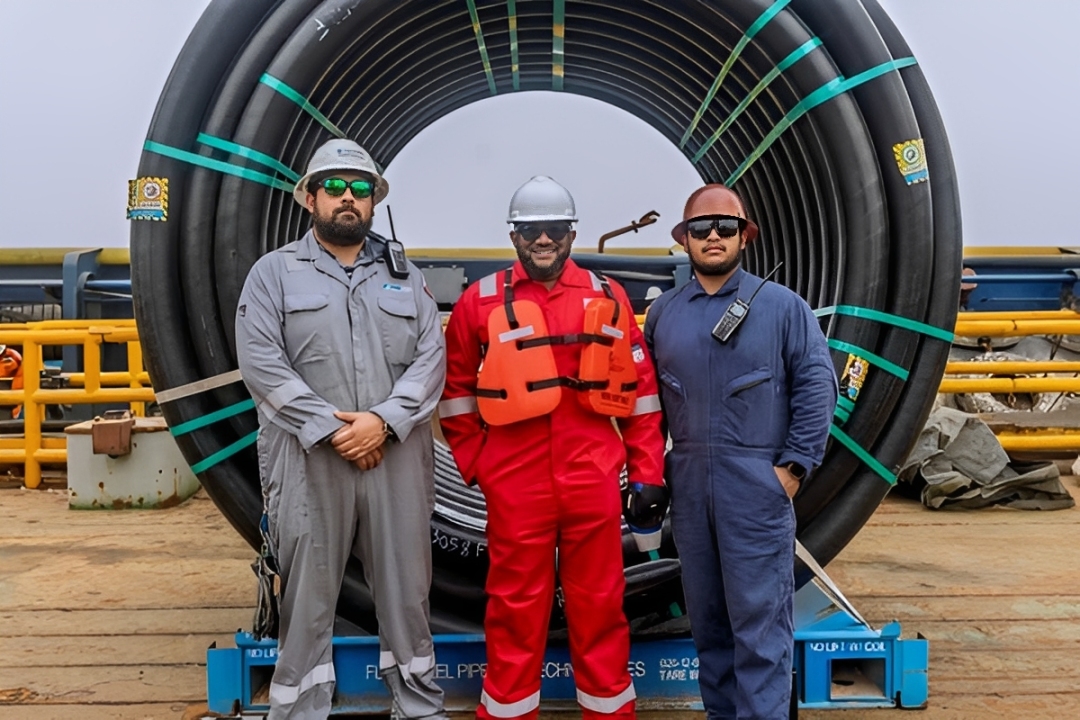
Kenyon International has disrupted offshore engineering by deploying Nigeria’s inaugural FlexSteel underwater pipeline at OML 123. The project achieved an 80% duration reduction versus traditional methods, restoring production in record time. Read more.
CRYPTO TRACKER
The World Wide Web3
Source:

Coin Name | Current Value | Day | Month |
|---|---|---|---|
 Bitcoin Bitcoin | $80,934 | + 0.17% | + 11.17% |
| Ether | $2,336 | + 0.35% | + 4.58% |
| SUI | $1.29 | + 20.02% | + 37.99% |
| Solana | $94.56 | + 2.26% | + 13.40% |
* Data as of 06.30 AM WAT, May 11, 2026.
Naira Life 2026 is here!

Join 2,000+ in Lagos on August 22 for unfiltered wealth strategies, investment clinics, pitch competitions, and real talk about building long-term financial power. Get 15% off early bird tickets.
Job Openings
- Big Cabal Media — Senior Motion Designer, YouTube Growth Strategist, Editor-in-Chief (TechCabal), Reporter, Enterprise & Policy, Editor (Analytical), Business Development Executive — Lagos, Nigeria
- Moniepoint —Backend Engineer (Women in Tech Internship) — Lagos, Nigeria
- Kuda — VP of Engineering — Lagos, Nigeria
There are more jobs on TechCabal’s job board. If you have job opportunities to share, please submit them at bit.ly/tcxjobs.

Written by: Zia Yusuf and Opeyemi Kareem
Edited by: Emmanuel Nwosu and Ganiu Oloruntade
Want more of TechCabal?
Sign up for our insightful newsletters on the business and economy of tech in Africa.
- The Next Wave: futuristic analysis of the business of tech in Africa.
- Francophone Weekly by TechCabal: insider insights and analysis of Francophone’s tech ecosystem
P:S If you’re often missing TC Daily in your inbox, check your Promotions folder and move any edition of TC Daily from “Promotions” to your “Main” or “Primary” folder and TC Daily will always come to you.

How did you find today's edition of #TCDaily? |