- 👨🏿🚀TC Daily
- Posts
- ‘How to licence data centres’
‘How to licence data centres’
Inside: Leila Fourie to join Vodacom board.

Emmanuel Nwosu
September 09, 2026


Wazzup. ☀️
Nigeria’s evolving data localisation rules raise questions that go beyond where data is stored.
On Thursday, September 10, TechCabal Insights will convene senior leaders for Power Brunch: Nigeria Data Sovereignty Future, an invitation-only conversation on meeting changing regulatory requirements without slowing the businesses and infrastructure powering Nigeria’s digital economy.
We’re bringing together compliance, risk, technology, infrastructure, cloud, data, cybersecurity, operations, transformation, and payments leaders, as well as CEOs and senior decision-makers from banks, fintechs, PSPs, and related businesses.
Want to be in the room?Join the waitlist.

Psst. Down here. We have more good news: Moonshot early bird sales have been extended to Friday!
You now have two more days to secure your Moonshot 2026 ticket at 20% off before the discount ends this Friday.
Don’t miss out. Secure your ticket before the early bird offer ends.
Let’s get into today’s dispatch.
Become smarter about tech and commerce in Francophone Africa, and the policies shaping them. Read previous editions here first and subscribe below.

Regulation
Kenya is creating a new licence for owning and operating data centres

Data centres used to be the kind of infrastructure people never thought about. Your app worked, your money moved, and that was that. Nobody was asking where the computers making it all happen were sitting. Now Kenya has many of those buildings (and more on the way), so the regulator is giving them their own rulebook.
What happened? The Communications Authority of Kenya (CAK), the country’s telecoms regulator, said it wants to introduce a standalone licence for commercial data centres. The CAK said the change will align its broader licencing regime with the evolving industry.
Explain like I'm new here: Until now, commercial data centres were treated as part of the physical infrastructure that supports telecommunications under the Network Facilities Provider (NFP) Tier 2 licence. The licence category is a regulatory umbrella for companies that build and operate infrastructure used to move electronic communications around Kenya, including transmission, switching, and routing systems, terrestrial networks, satellite networks, mobile networks, and commercial data centres.
In previous consultations, operators also argued that their core business is providing buildings, power, cooling, and server space, not telecommunications itself. Now, they're getting their own category.
Big industry, big headache? This is what happens when an industry gets big enough for regulators to start worrying about. Kenya had nearly 20 megawatts (MW) of data centre capacity in 2025, with roughly 150MW more planned across the region. That’s enough electricity to power thousands of homes.
Operators in Kenya are also building big projects, making these licences essential. Pan-African telecom firm Airtel Africa is building a 44MW data centre facility called Nxtra in Tatu City, expected to be completed in 2027. Its Kenyan subsidiary is still awaiting an NFP Tier 1 licence from CAK, which will enable the telecom firm to natively build and operate large-scale data centres without needing separate permits. The NFP Tier 2 licence serves as a baseline operational starting point for regional data centres.
More data centres also means more support for cloud capacity as demand increases. According to global consulting firm PwC, nearly 90% of the surveyed organisations increased their cloud usage to support AI and machine learning. More AI means more computing, which means more servers, and eventually more data centres.
What changes? The current NFP Tier 2 licence lasts 15 years, compared with 25 years for Tier 1. The latter costs KES 5,000 ($38.63) to apply and KES 15 million ($115,897) for the licence. Operators also pay an annual fee of 0.4% of gross revenue or KES 4 million ($30,905), whichever is higher. Tier 2 has the same application and licence fees, but a lower minimum annual fee of KES 800,000 ($6,181). The current system already gives the CAK broad oversight of NFP operators. The new framework could give it more specific rules for data centres, rather than treating them like other NFP operators.


Every business owner needs to watch this.

The business questions you Google, answered by experts. Watch for free .
Telecoms
Former JSE CEO Leila Fourie is joining Vodacom’s board
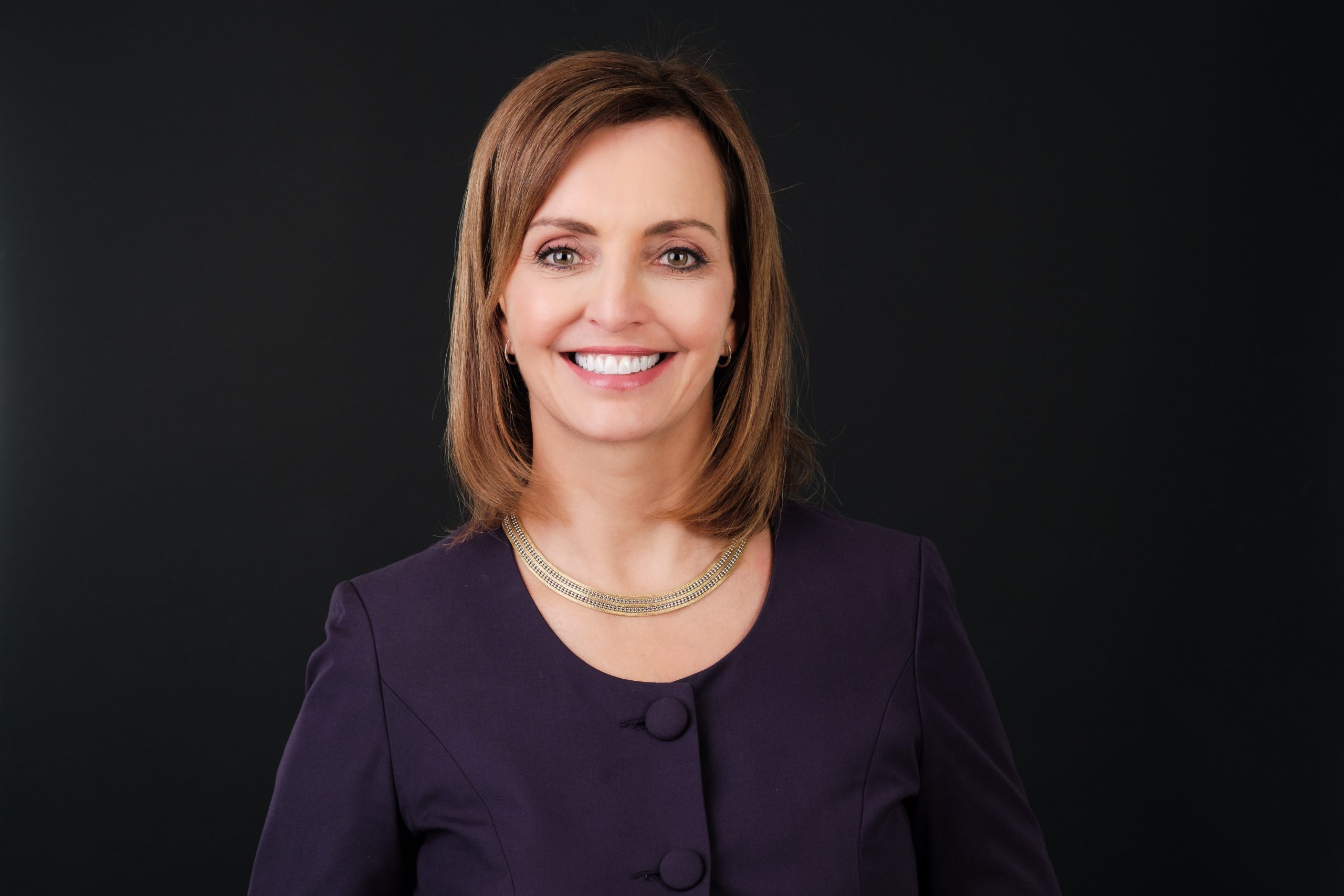
After spending over six years running the Johannesburg Stock Exchange (JSE), South Africa’s stock exchange, former chief executive Leila Fourie retired earlier this year. We now know where she’s heading next.
Fourie is joining Vodacom, one of Africa’s largest telecom companies.
What happened? Vodacom has appointed the capital market veteran as an alternate director to the independent non-executive board chairman, Saki Macozoma, effective October 9. She will spend the next nine months as an alternate director and a member of the nomination and remuneration committees before becoming a full board member when Macozoma retires in July 2027, having reached his mandatory 10-year board tenure limit.
Explain like I'm new here: Before Vodacom, Fourie was running the JSE, Africa’s largest stock exchange. She became chief executive officer in October 2019 and retired in March 2026, handing the job to Valdene Reddy, who took over on April 1.
Why Vodacom wants her: Under Fourie’s leadership, the combined market capitalisation of companies listed on the JSE rose from R12.6 trillion ($788 billion) in 2019 to more than R24 trillion ($1.5 trillion) by the end of 2025. Total return on equity (ROE) also improved from 17% to 22%. During her time in the role, she pushed the exchange to diversify beyond traditional share trading and build new products, including a private-markets platform.
Toward the end of her tenure, the bourse was mulling plans to transition to a 24-hour trading window to compete with digital investment platforms and products that are accessible round-the-clock. However, the South African stock exchange hasn’t made that move yet.
Beyond capital markets, Fourie also has banking experience. Before the JSE, she was chief executive officer of the Australian Payments Network and previously ran the card division at Africa’s largest lender, Standard Bank.
Between the lines: Vodacom's fintech business had 103 million active customers in the full year ending March 2026 and processed $525.6 billion in transactions. Fourie’s operator experience in payments, banking, capital markets, and regulation could be a useful sounding board for the telecom company’s appetite for scale.
She'll not be the only new face: Former Airtel Africa chief executive officer Segun Ogunsanya is also joining Vodacom’s board as an independent non-executive director on October 9. The board already includes Shameel Joosub, Vodacom’s longtime chief executive officer; Khumo Shuenyane, a former MTN mergers and acquisitions (M&A) chief; and Nomkhita Nqweni, former Absa Bank wealth and insurance executive. Now we wait until July 2027 to watch Fourie’s ascension to Vodacom’s board.
We've extended offer for Moonshot Early Bird tickets. Take advantage!

We have more great news: Moonshot early bird sales have been extended to Friday! You now have two more days to secure your Moonshot 2026 ticket at 20% off before the discount ends this Friday. Grab your early bird tickets now and get 20% off .
Fintech
Kenyan workers are losing access to global payment platforms

Kenyans who earn money online or receive payments from abroad are finding that the platforms they rely on can change the rules with little warning. Over the past year, PayPal has restricted some accounts, Twitch ended creator monetisation, Hurupay stopped offering US dollar banking, and Sendwave paused its digital dollar wallet in Kenya.
The reasons vary, but the disruption points to a problem: Kenya’s digital economy still depends heavily on a small group of foreign companies to connect workers and businesses to the global financial system.
What happened? One by one, major platforms have changed how Kenyans can receive, hold, or earn money. PayPal restricted some accounts after asking users for documents, Twitch ended its Partner and Affiliate programmes for Kenyan creators, Hurupay stopped its US dollar banking service, and Sendwave paused its stablecoin-backed wallet. The companies gave different explanations, from compliance checks and technical problems to unreliable banking partners.
Explain like I’m new here: Think of these platforms as bridges between Kenya and the rest of the world. A freelancer in Nairobi might use PayPal to get paid by a client in the US, while a creator might rely on Twitch for income, and another worker might use Sendwave or Hurupay to move dollars. When one bridge closes or changes how it works, users have to find another route. Kenya has other payment options, but switching is not always quick or easy.
The bigger problem: Kenya is becoming a harder market for international financial companies to navigate, with tighter tax, licensing, transaction-monitoring and reporting requirements. But regulation does not explain every change. Hurupay, which has rebranded as Kolan, told TechCabal that its decision had nothing to do with Kenya’s Financial Action Task Force (FATF) grey-listing and was caused by slow and unreliable banking partners. Sendwave’s parent company Zepz similarly said its wallet pause was due to technical difficulties.
Why it matters: These changes expose how much Kenyan workers and businesses depend on a small number of companies to get paid globally. Local and regional players such as PesaLink and NALA are building more payment routes, but they face many of the same banking and regulatory constraints. The bigger question is whether Kenya can build enough alternatives that when one foreign platform changes its rules, workers and businesses do not have to scramble to find another way to get paid.
Streaming
South Africa has spent $116 million in the last 16 years to keep old TV signals alive. Why?
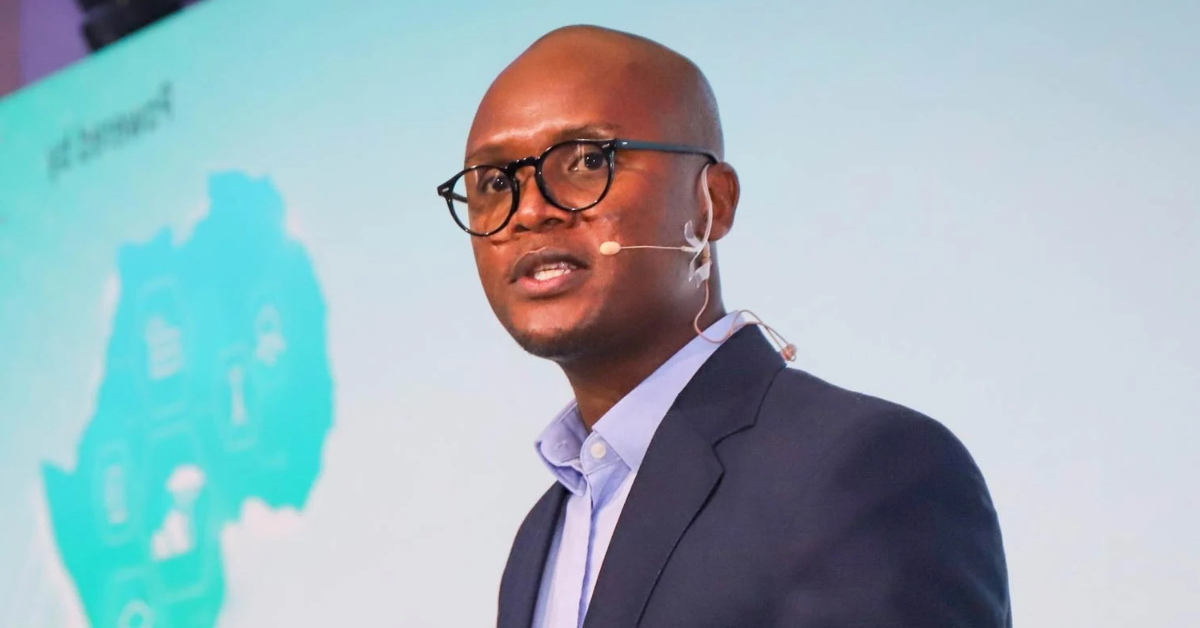
South Africa is trying to move households from old analogue TV signals to digital broadcasting. The point is not just better TV. Digital broadcasting uses less radio spectrum, which can then be used for mobile networks and other wireless services. It also allows free-to-air local broadcasters such as the SABC and e.tv to offer more channels and services.
What’s happening? The country has not fully switched off analogue TV, so it is still running analogue and digital signals. This “dual illumination” has cost the government R1.85 billion ($116 million) between 2010 and 2026, including R164.3 million ($10.3 million) this year.
Why are decoders involved? A set-top box is simply a decoder. It connects to an older TV and converts the digital signal so the TV can display it. The government is paying for these boxes for poorer households because it does not want people who rely on free SABC and e.tv broadcasts to lose access to television when analogue signals are switched off. The government said it has received about 1.5 million applications for subsidised boxes since registration began in 2015.
What about MultiChoice? DStv customers are largely unaffected because satellite TV is already digital. MultiChoice, Africa’s largest pay-TV company and DStv operator, also switched off its analogue transmission sites in 2018. The bigger impact is on free-to-air broadcasters and households that still receive TV through an aerial.
What happens next? The government has not given up. In its 2026 budget speech, South Africa’s Communications Minister Solly Malatsi said the switch-off remains unresolved, but teams are still installing subsidised decoders and the government is engaging broadcasters on the next steps.
The question is no longer whether South Africa wants digital TV. It does. The question is how quickly it can finish moving the remaining households without cutting people off from free television, while also freeing spectrum that mobile operators have already paid for.
Zoom out: The real prize is spectrum. South Africa has already auctioned high-demand spectrum to mobile operators. Finishing the switch-off would allow more of that spectrum to be released for mobile services, helping operators add network capacity.
CRYPTO TRACKER
The World Wide Web3
Source:

Coin Name | Current Value | Day | Month |
|---|---|---|---|
 Bitcoin Bitcoin | $79,844 | - 0.21% | + 22.89% |
| Ether | $2,510 | - 0.18% | + 30.89% |
| Teller | $1.77 | + 9.80% | + 111.04% |
| Solana | $105.56 | - 0.97% | + 41.45% |
* Data as of 06.41 AM WAT, September 9, 2026.
Job Openings
Looking for jobs? There are additional openings on TechCabal’s job board. We've also cleared out outdated listings to keep opportunities fresh for job seekers. If you're hiring and would like to feature an open role, please submit it via this form.

Written by: Yemi Kareem and Emmanuel Nwosu
Edited by: Emmanuel Nwosu & Ganiu Oloruntade
Want more of TechCabal?
Sign up for our insightful newsletters on the business and economy of tech in Africa.
- The Next Wave: futuristic analysis of the business of tech in Africa.
- Francophone Weekly by TechCabal: insider insights and analysis of Francophone’s tech ecosystem
P:S If you’re often missing TC Daily in your inbox, check your Promotions folder and move any edition of TC Daily from “Promotions” to your “Main” or “Primary” folder and TC Daily will always come to you.