- 👨🏿🚀TC Daily
- Posts
- Kenya gives credit where it’s due
Kenya gives credit where it’s due
Inside: Nigeria’s CAC affected by security breach.

Emmanuel Nwosu
April 16, 2026


Good morning. ☀️
Will tech entrepreneurs join in shaping Nigeria’s 2027 elections?
While you consider that question, Zikoko Citizen, in collaboration with TechCabal Insights, has released the Citizen Report 2026, a comprehensive survey of youth electoral behaviour ahead of Nigeria’s 2027 general elections, based on responses from 10,681 people across all 36 states and the FCT.
As we edge closer to the moments that will define the kind of economy industries have over the next four years, it is pertinent that all eyes are on what matters: the citizens’ willpower to vote.
What will the polls look like come 2027? Download the Citizen Report here.
Let's dive in.

Fintech
Kenya licences 32 more digital lenders

Before digital lenders in Kenya were mandated to obtain licences, there were widespread concerns about loan pricing, unethical debt practices, and the misuse of personal data.
To address this, the Central Bank of Kenya (CBK) mandated licence registrations starting in March 2022.
Since then, the CBK has disclosed that it has received over 800 applications. On Tuesday, the regulator issued 32 more digital lending licences, taking the total count to 227.
What the CBK looks out for: The regulator assesses digital lenders on business model, ownership structure, consumer protection standards, and how the management and shareholders of these companies are structured. Licenced digital lenders must also meet specific requirements, including rules around anti-money laundering (AML) monitoring and limits on how borrowers are listed on credit bureaus.
The rules are still being tightened: In 2025, the CBK published a draft Non-Deposit Taking Credit Providers Regulations, which further define how these lenders should operate. The proposed regulations required credit-only providers with at least KES 20 million ($155,000) in capital, borrowings, or loan book to obtain a licence. It also imposed stricter data protection practices, including limiting the information digital lenders can collect, setting boundaries on how it can be shared or transmitted to bureaus.
Kenya’s digital lending market is still booming. As of 2025, lenders in the country had disbursed 5.5 million loans worth KES 76.8 billion ($594 million) in the previous three years. It is an industry growing large enough for tight oversight to protect users and ensure safer borrowing.


20+ Markets. One API.

Fincra connects your business to Africa's payment rails without building market by market. For collection, payout, FX, and settlement through a single integration. See what this means for your business.
Government
Nigeria's corporate registry says a security breach affected parts of its system

Nigeria’s Corporate Affairs Commission (CAC), the authority that keeps the records of companies and businesses operating in the country, has confirmed a security breach that allowed unauthorised access to parts of its system.
“Appropriate containment measures have been implemented, and additional safeguards are in place,” the CAC said in a statement on Wednesday.
What is CAC doing about it? The Commission has further told users and stakeholders to monitor their records on the CAC portal and “remain cautious” of suspicious data requests or communications.It also claimed that it activated response protocols and brought in the National Information Technology Development Agency (NITDA), the IT sector regulator, and other partners to investigate.
A graveyard of security breaches: Cybersecurity incidents are becoming more common across Nigeria and Africa. In March, Nigerian payment processing firm, Remita, and tier-2 commercial lender, Sterling Bank, were allegedly breached. October 2025 had the biggest healthcare incident with Kenya’s M-TIBA data breach, where hackers published siphoned patient records on public Telegram channels. Between 2019 and 2025, Africa lost more than $3 billion to cybercrime, according to INTERPOL.
So, what now? Regulators across the continent are fighting hard. In April 2025, Zambia split its cyber law into a Cyber Security Act governing security service providers and a Cyber Crimes Act dealing with offences and penalties. In the same month, South Africa's Information Regulator mandated companies to log breaches through an online reporting portal and must state what happened, what data was involved, what they are doing to contain it, and what individuals should do to protect themselves. In Kenya, operators are mandated to alert data controllers of potential data breaches within 48 hours, even if the full facts are not yet in.
Yet, the cyber-threats are not slowing down, so defences have to catch up.
20+ Markets. One API.
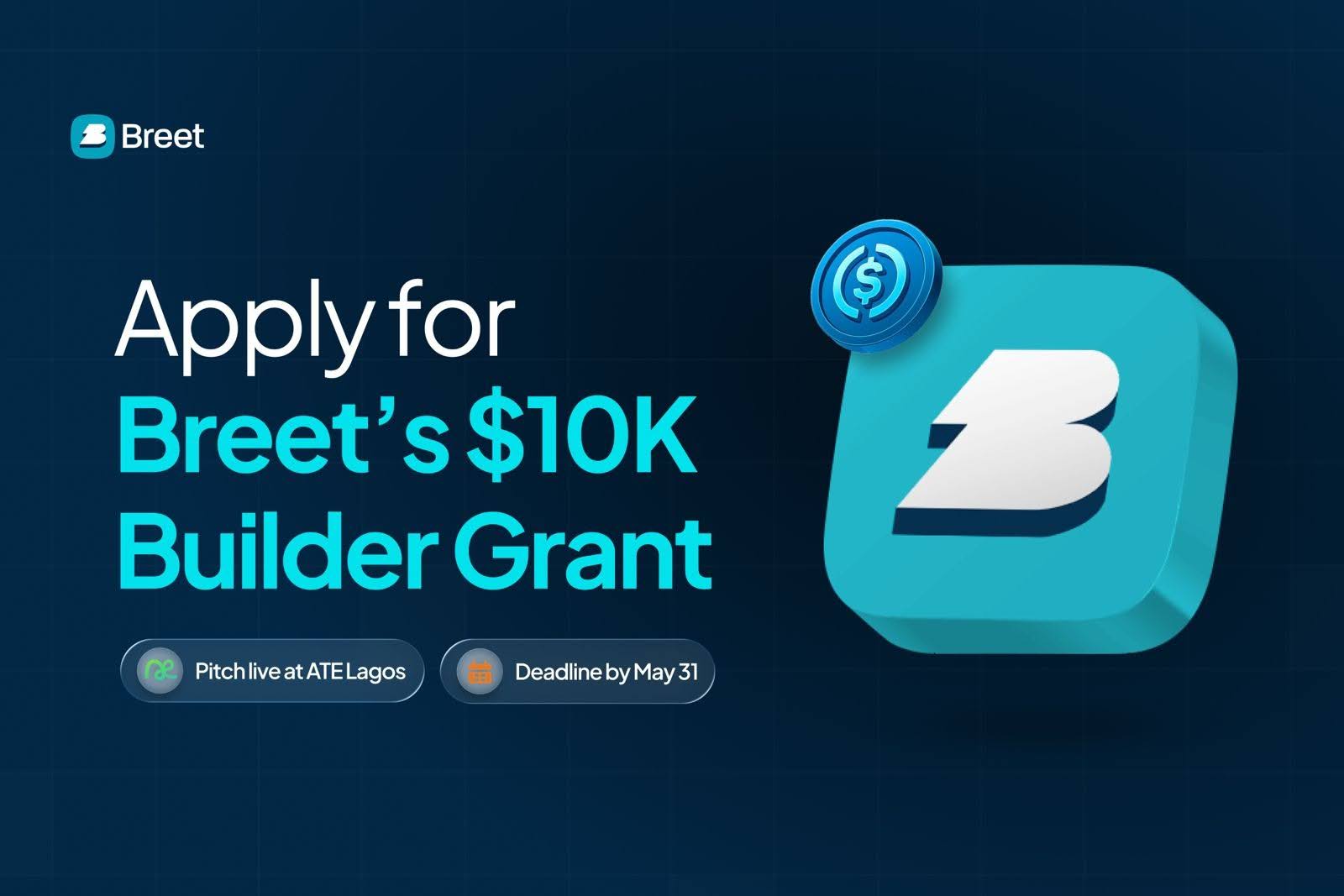
Breet is offering a $10,000 equity-free grant to growth-stage fintech, crypto and payments startups in Africa. Integrate the API, submit your product, and pitch live at ATE Lagos. Two winners get $5,000 each. Deadline by May 31. Learn more.
Fintech
Cellulant taps former Xapo Bank executive as COO

Cellulant is done hiring for growth. It is now hiring to fix the engine mid-flight.
The pan-African payments company has appointed former Xapo Bank executive Anthony Hernandez as Chief Operating Officer (COO), the latest in a string of senior hires that includes a Chief Product and Technology Officer (CPTO) in February and a Chief Financial Officer (CFO) in March.
Between the lines: A trained accountant, Hernandez has spent the majority of his career working in banking and financial services firms, including Xapo Bank, DEMICA, GE Capital, and, most recently, at UK-based Railsr.
He is bringing his experience in risk and corporate operations to Cellulant with one goal in mind: to make payments work better. That means fewer failures, stronger transaction visibility, and smoother onboarding across Cellulant’s 20 African markets, where infrastructure is anything but uniform. At 4.5 million daily transactions, even small inefficiencies quickly become expensive problems.
State of play: Cellulant reached profitability in 2024; that milestone often changes how a company thinks. The focus shifts from “how fast can we grow?” to “how well can we run?” This hire, and the ones before it, suggest Cellulant is firmly in that second phase.
It is also a defensive move. Competition is no longer just other fintechs. Banks and large merchants are increasingly building their own payment stacks, reducing their reliance on third-party providers. For a company like Cellulant, scale alone is no longer enough. Reliability is what keeps customers from quietly switching.
Zoom out: Hernandez’s background points to someone brought in to enforce discipline at the executive level. In payments, expansion gets you noticed. Execution is what keeps you in business.
TECHCABAL 4.0

In March 2013, TechCabal published its first article. Thousands of stories later, the work continues, and today, it goes deeper.
TechCabal has always been free. That's not changing.
We've opened a new layer. Reporting that goes further, built on sources you won’t find anywhere else, and told in ways we haven't tried before. You're among the first to see it.
Getting in takes less than 15 seconds.
You're one step away from the other side.
Click the button below to see what TechCabal 4.0 looks like and what it means for you.
Emerging Tech
Zambia consolidates 12 million patient records as it builds AI-ready health system
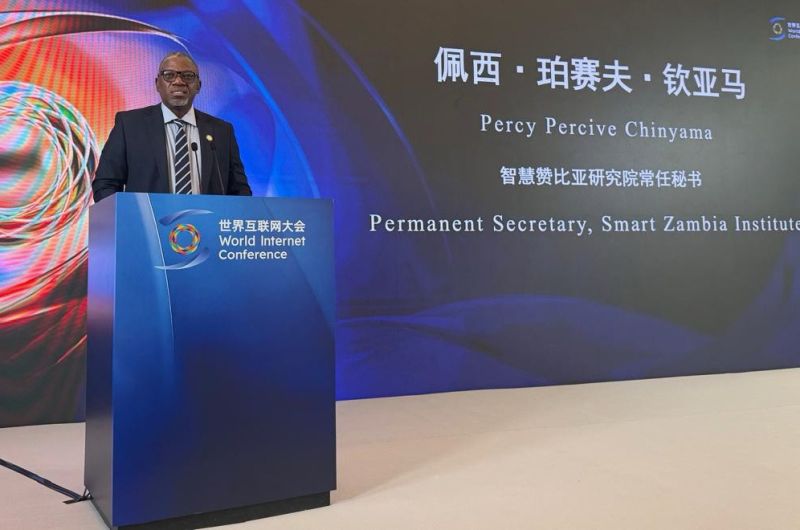
Every other market day, there's an African country that wants to do something with AI. Zambia has joined that cohort of countries, including Indonesia, Brazil, India, Singapore, Vietnam, and the UK, digitising their patient health records using AI, but first, it wants to address an underlying sorting problem.
Health paperwork can get messy; records can get scattered across facilities, duplicated across systems, and sometimes go missing when it matters most. Zambia wants to sort first and introduce Big Brother AI into the process later.
What is Zambia doing? Zambia says it consolidated more than 12 million patient records into its SmartCare Pro platform, a national electronic health system launched in 2023. Over 2,000 health facilities are now connected, and 14,000 health workers are trained to use it. This replaces a patchwork of systems across more than 1,600 facilities that previously could not communicate. Now, patient data can be stored, accessed, and shared across locations, creating a single, unified view of healthcare records.
What does Zambia need AI for? With data finally in one place, Zambia is positioning itself to use AI for things that actually matter in healthcare: identifying disease patterns, improving diagnosis, forecasting outbreaks, and supporting clinical decisions. These systems depend on large volumes of clean, structured data. Without that, AI is just a buzzword sitting on top of broken inputs.
Will AI solve patient record storage? Not really. AI does not fix bad data. It depends on good data. What Zambia has built so far is the prerequisite: a centralised, standardised data layer. The real challenge is ensuring that records are consistently entered, updated, and accurate across thousands of facilities. If that discipline slips, the intelligence layer on top will not deliver much value.
Zoom out: Zambia’s approach stands out; it is the only known African country aiming to implement AI into its healthcare patient database. While others announce AI strategies, it is doing the slower work of integration, training, and system-building, backed by President Hakainde Hichilema.
CRYPTO TRACKER
The World Wide Web3
Source:

Coin Name | Current Value | Day | Month |
|---|---|---|---|
 Bitcoin Bitcoin | $74,948 | + 0.93% | + 0.82% |
| Ether | $2,353 | + 1.01% | + 1.60% |
| Bio Protocol | $0.04548 | + 122.51% | + 99.98% |
| Solana | $85.14 | + 2.06% | - 9.20% |
* Data as of 06.20 AM WAT, April 16, 2026.
Events
- The voices shaping Africa’s digital future are taking the stage. From AI and IoT to cloud, connectivity and smart infrastructure, IOT West Africa | Data Centre & Cloud Expo Africa 2026 brings together the leaders building the continent’s next digital chapter. This is where the ecosystem meets, and we'll see you there. The event kicks off on April 28–30 at the Landmark Centre, Victoria Island, Lagos. Register here to attend.
- All roads lead to Nairobi on May 7, 2026. Gathered at the Sarit Expo Centre, senior leaders from across Africa’s fintech and payments ecosystem will gather for a day of meaningful connections, market insights, and cross-border collaboration. The focus of the Africa Fintech Live event is on driving real engagement, bringing together industry leaders and emerging innovators to spark strategic conversations that will shape the future of finance on the continent. Secure your early bird ticket now at 50% off.


Written by: Emmanuel Nwosu and Opeyemi Kareem
Edited by: Emmanuel Nwosu and Ganiu Oloruntade
Want more of TechCabal?
Sign up for our insightful newsletters on the business and economy of tech in Africa.
- The Next Wave: futuristic analysis of the business of tech in Africa.
- Francophone Weekly by TechCabal: insider insights and analysis of Francophone’s tech ecosystem
P:S If you’re often missing TC Daily in your inbox, check your Promotions folder and move any edition of TC Daily from “Promotions” to your “Main” or “Primary” folder and TC Daily will always come to you.

How did you find today's edition of #TCDaily? |