- 👨🏿🚀TC Daily
- Posts
- Somalia’s accidental bank
Somalia’s accidental bank
Inside: Lesaka’s Bank Zero deal postponed.

Opeyemi Kareem
June 19, 2026


TGIF ☀️
It’s the weekend, my favourite time of every week. While I plan to bed rot and catch up on my 11th season of a show they made years before I was born, you should be planning to get your Naira Life tickets before they sell out, so you can learn the ins and outs of money and how to build wealth in Nigeria.
—Zia
Get smarter about Francophone Africa with our newsletter, Francophone Weekly—the startups, tech policies, and institutions building the pipelines for ecosystem growth.

features
Quick Fire 🔥 with Gbolahan Adebayo
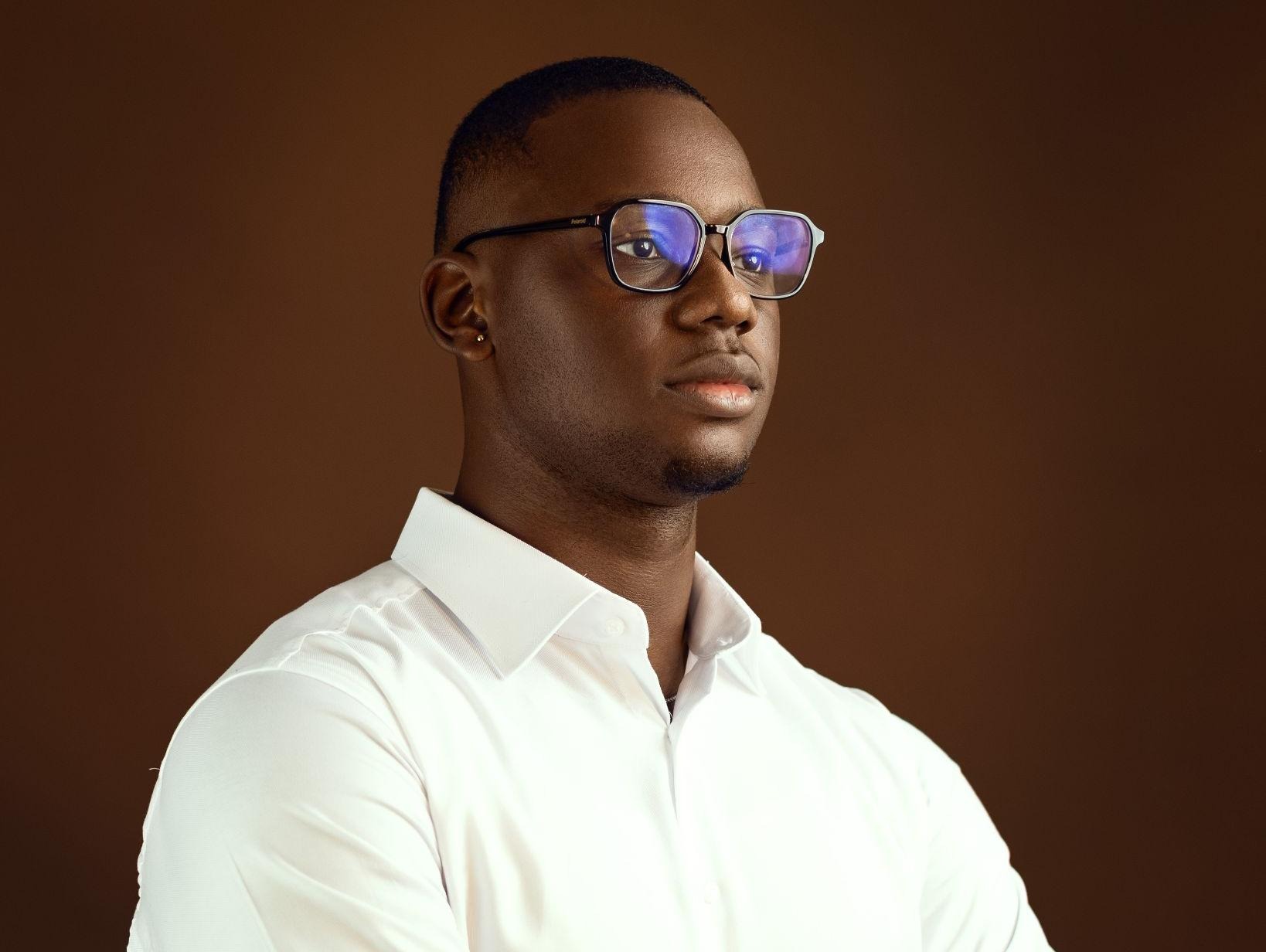
Gbolahan Adebayo is a data and business intelligence analyst who specialises in turning complex data into clear, actionable insights through visualisation. He currently works as a Senior Data Analyst at Sanlam Fintech in Johannesburg, South Africa, and has previously built dashboards and analytics infrastructure for MAGNiTT, Aspire, and Subway across Nigeria, South Africa, the United Arab Emirates, Singapore, and the United States.
- Explain your job to a five-year-old.
Have you ever gotten food from someone who sells jollof rice and puff-puff by the roadside?
Some days, the whole street shows up, and everything finishes before noon. Other days, she cooks plenty, and it just sits there. If she's only guessing, she either runs out or she wastes food and money she can't get back.
My job is to quietly remember everything for her, how much sells, when the rush comes, whether rain brings more buyers, and then build her a small board that watches it all and tells her plainly, “Friday is busy, cook more rice.” Now she's not guessing. She just looks at the board, and she can make better decisions.
- What does a business intelligence analyst actually do day-to-day that people don't expect?
People expect it to be all about building a pretty dashboard. That's the last 20%. The rest is detective work and translation of business questions. A lot of my day-to-day work is asking annoyingly basic questions, like “if this number moved, what would you actually do?”
I spend lots of time cleaning and chasing down why two “correct” numbers refuse to match. And the bit nobody expects: a good part of the job is just saying no. The craft people see is the visual. The craft they don't see is deciding what deserves to be shown at all.
- How can someone break into business intelligence analytics, and where do they even start?
You need a free tool and one real question. Start with SQL, because that's the actual workhorse, and a visualisation tool like Tableau, which has a free public version. And lean on AI tools as you learn. They're the fastest tutors you'll ever have, explaining a concept, getting you unstuck on a query, and making you understand concepts even faster.
Then here's the part people skip: go and build something real, and put it where people can see it. Don't wait until you feel ready, because you never will. Pick a question you genuinely care about, answer it with data, publish it, and ask people better than you to give feedback.
- How long did it take you to get to where you are, and what did that journey actually look like?
My journey started at an early-stage startup where I was the sole analyst and chart maker, steering the ship on how insights were derived. From there, I worked under a manager who knew so much that he sharpened the need for me to understand the business deeply before trying to solve anything.
Then I moved into consulting, brought in to drive big business intelligence changes across platforms while training in-house analysts along the way. And now I sit within a specialised data and AI team inside a larger corporation, finding ways to help different business units make sense of what they have and pull the maximum value out of it.
The journey has been less about collecting tools and more about getting closer to understanding businesses and combining that with my technical ability to help stakeholders make business-driven decisions.
- You co-founded the Lagos Tableau User Group and mentor across multiple programs. What's driving that investment in the community?
Honestly, for me, I think it's the simplest thing in the world. I am a product of community. I didn't get here through some private mentor or an expensive programme.
I got here because folks on the Internet looked at my work, told me where it was weak, and pulled me up. Building community is just me trying to be that for the next person, except closer to home. There's so much raw talent in Nigeria and across Africa. What's usually missing isn't ability; it's access, visibility, and someone a few steps ahead saying, “here's how.”


We Have Secured the Bank of Ghana EPSP Licence.
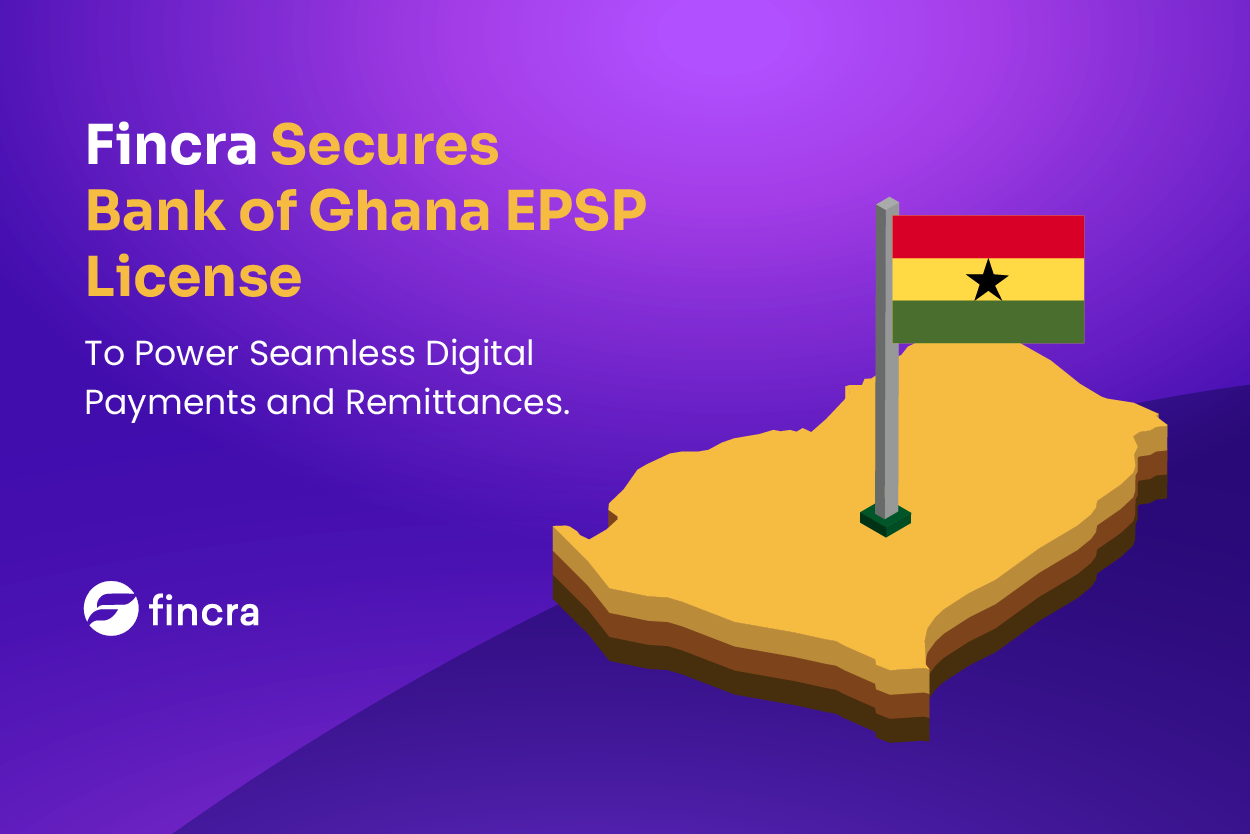
Fincra has officially secured its Enhanced Payment Service Provider licence. This regulatory milestone authorizes Fincra to directly collect, process, and settle payments in Ghanaian Cedis, offering a highly streamlined financial pipeline for businesses operating within the region. Start here.
companies
Lesaka is still waiting for the keys to Bank Zero

Turns out buying a digital bank is like buying a house. You can agree on the price, sign the paperwork, and even tell everyone you're moving in. But until all the approvals come through, you're still standing outside holding a box, much like Lesaka right now.
What happened? The South African fintech has pushed back the deadline for its acquisition of South African digital bank Bank Zero by nearly six months. The fintech first announced plans to buy Bank Zero for about R1.1 billion ($61.4 million) in 2025. The deal was expected to close this year, but the company now says it needs until January 2027 while it waits for the remaining regulatory approvals.
Good news and not-so-good news: The good news is that the Competition Tribunal and the Competition Commission have approved the transaction and allowed it to proceed. Which leaves banking-specific consents. With banking acquisitions, regulators will need to review more than the terms of the deal, which could be why it is taking time.
What's so special about Bank Zero anyway? A banking licence could take years to secure and require a large volume of capital. Bank Zero already has all of that, so instead of building a digital bank from scratch, Lesaka can simply buy one and plug it into the collection of payment and merchant businesses it already owns.
Why this deal needs to be done ASAP: Lesaka wants to combine its businesses and create a more connected financial services platform with the Bank Zero integration. The longer the deal sits in regulatory limbo, the longer those plans cannot fully unfold. The delay doesn't necessarily mean anything is wrong with the transaction,a as the regulators may just be taking their time. But every extra month means waiting longer to launch integrated products and extract the benefits that justified the $61.4 million price tag in the first place.
Naira Life 2026 is here!
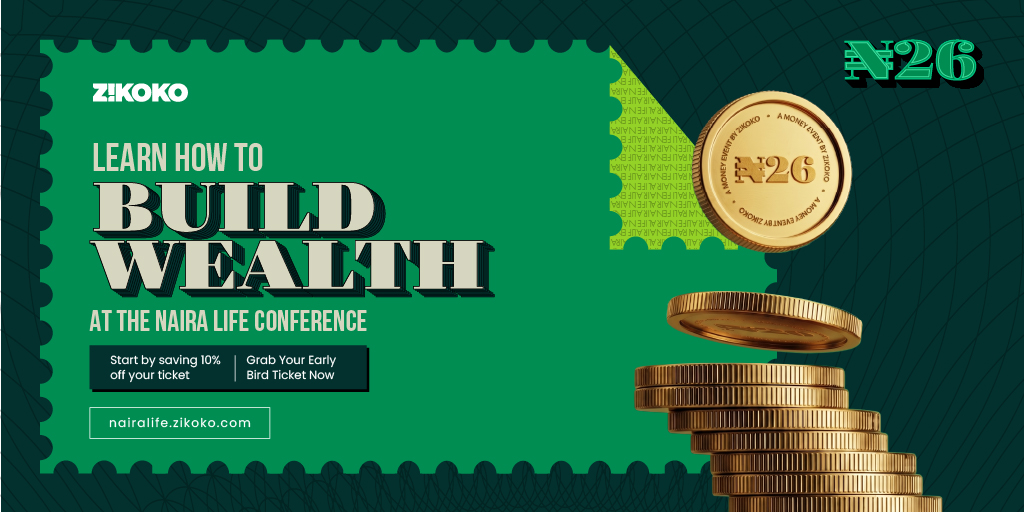
The theme for this year's Naira Life Conference by Zikoko is "All About Wealth."
Join 2,000+ in Lagos on August 22 for a day of practical money conversations and workshops designed to move you from simply earning an income to building lasting wealth. Get 15% off early bird tickets.
banking
The bank Somalia is still waiting for

Somalia's Hormuud Telecom, the country's largest operator, has spent two decades quietly becoming more than a phone company. Its CEO, Mohamed Aden Farah, told ITWeb Africa this week that Hormuud now serves as a core pillar of Somalia's financial system, humanitarian response, and digital economy — not just a connectivity provider.
Here's some context you'll need: Somalia has commercial banks. The Central Bank re-licensed 11 of them in late 2025 and is actively modernising its regulatory framework. But as of 2023, only8.8% of Somalis accessed formal banking services, compared to 89% using mobile money. When Hormuud launched EVC Plus in 2011, it wasn't disrupting banking — it was stepping into a vacuum left by Somalia's 1990s civil war. Today the platform handles155 million transactions worth $2.7 billion monthly, distributes humanitarian aid forover 145 NGOs, and in March 2026 plugged Somalia intoPAPSS — Africa's continental payment network — whilepartnering with Germany's GIZ on cross-border payments and AI. Physical cash in Somalia is so scarce thatan estimated 95-98% of Somali shilling notes in circulation are counterfeit. EVC Plus quietly became the more reliable currency.
Who’s happy about this? The100,000 low-income Somalis Hormuud is financing smartphones for by the end of 2026. The smartphones only require a $19 deposit, no formal credit history required, default rates below 4% in the pilot. Half of Hormuud's existing users are still on feature phones. This is their on-ramp to everything else.
But here’s the problem: In a 2025article for the Overseas Development Institute, Central Bank of Somalia Governor Abdirahman M. Abdullahi flagged that reducing "single-network fragility" is a priority. When one private company is simultaneously the payment system, the aid disbursement rail, and the primary financial tool for 89% of a country, an outage stops being an inconvenience and starts being a national emergency.
The bigger picture: Somalia's formal banking sector is growing — seriously, this time. But it's growing into an ecosystem Hormuud already built, already owns, and is now actively expanding. The banks are catching up to a race that started without them.
Insights
Funding tracker
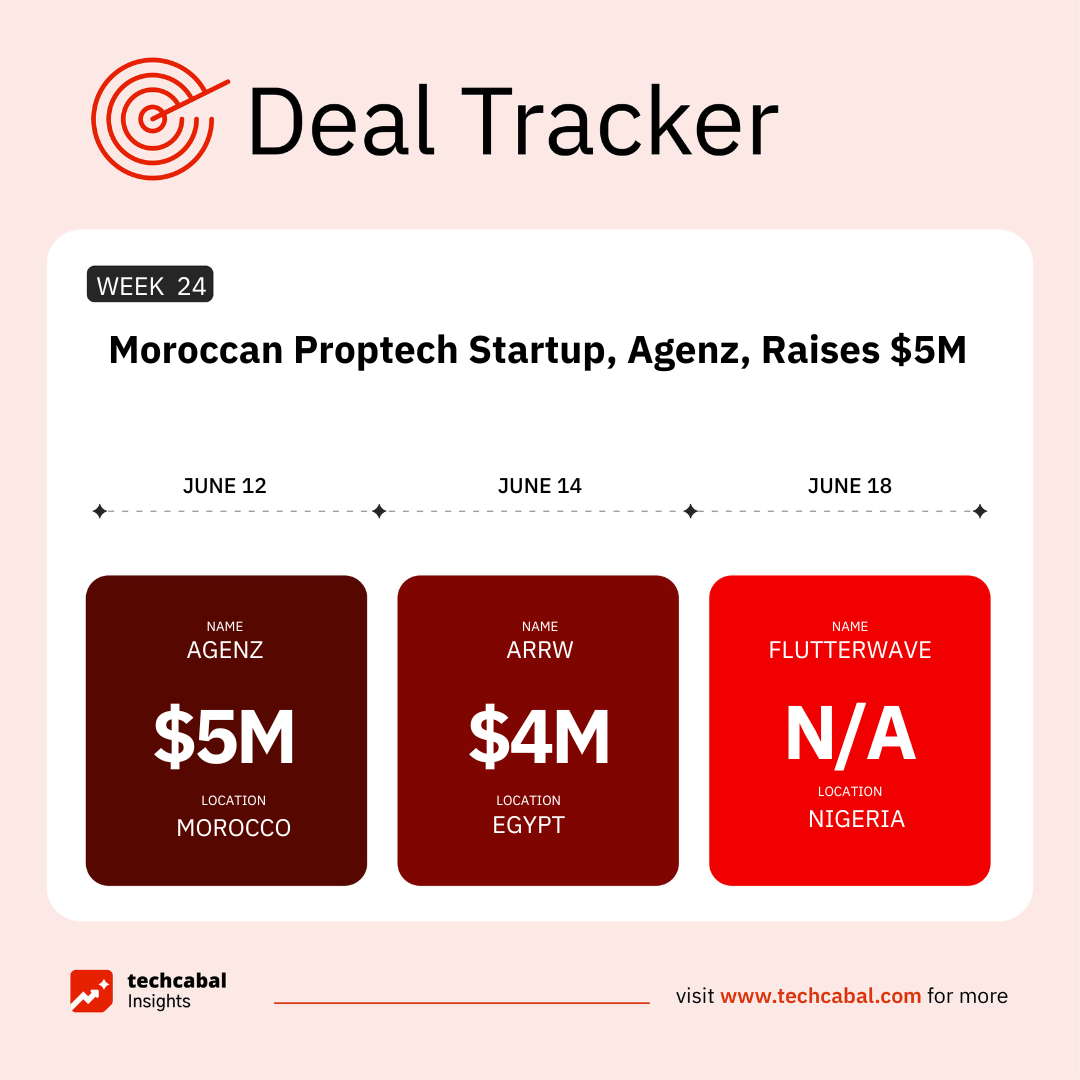
Agenz, a Moroccan Proptech startup, raised $5 million in seed funding from Breega, Attijariwafa Ventures, and Saviu Ventures. (June 12)
Here are the other deals for the week:
- ARRW, an Egyptian Ride-Hailing startup, raised $4 million in a growth funding round from Tasheed Egypt. (June 14)
- Flutterwave, a Nigerian fintech startup, raised an undisclosed amount in funding from Ripple. (June 18)
Follow us on Twitter, Instagram, and LinkedIn for more funding announcements. Before you go,Who Owns Africa's Sky?. Find out here.
Showcase Your Brand at Moonshot by TechCabal

Founders. Investors. Policymakers. Enterprise leaders. Moonshot 2026 brings together the people shaping Africa’s technology ecosystem across AI, commerce, climate, enterprise, and culture. Spotlight your brand today.
CRYPTO TRACKER
The World Wide Web3
Source:

Coin Name | Current Value | Day | Month |
|---|---|---|---|
 Bitcoin Bitcoin | $62,662 | - 1.81% | - 18.75% |
| Ether | $1,694 | - 1.78% | - 20.21% |
| XRP | $1.13 | - 2.87% | - 17.25% |
| Solana | $68.60 | - 3.26% | - 18.99% |
* Data as of 06.54 AM WAT, June 19, 2026.
Opportunities
- The Stellar Development Foundation has launched its first accelerator programme targeting Europe, the Middle East, and Africa, partnering with blockchain venture firm CV Labs to back ten early-stage startups building payments infrastructure, tokenised assets, and decentralised finance applications. The 12-week programme, beginning August 2026, will run primarily remotely but includes an on-site component in Cape Town and concludes with a demo day at Stellar's Meridian conference in Lisbon in October. Each selected startup can receive up to $150,000 in XLM, Stellar's native token, in initial funding. Apply by July.
- Accelerate Africa is investing between $250,000 and $500,000 in early-stage African startups through its founder-focused programme, with no upfront equity commitments required or application fees to apply. Built by the team that advised Andela, Flutterwave, and Moove, the initiative selects 12 founders per cohort. Applications open until July 25.
- The Female Founders Growth Programme is accepting applications from Nigerian women-led businesses. The investment readiness programme provides strategic support, investor preparation, and access to a network of funders, with qualifying participants eligible for up to $2 million in combined debt and equity financing. Selected businesses will also pitch to investors and financial institutions at a flagship Demo Day. Applications are open until June 22, 2026..

Written by: Success Sotonwa Opeyemi Kareem and Zia Yusuf
Edited by: Ganiu Oloruntade
Want more of TechCabal?
Sign up for our insightful newsletters on the business and economy of tech in Africa.
- The Next Wave: futuristic analysis of the business of tech in Africa.
- Francophone Weekly by TechCabal: insider insights and analysis of Francophone’s tech ecosystem
P:S If you’re often missing TC Daily in your inbox, check your Promotions folder and move any edition of TC Daily from “Promotions” to your “Main” or “Primary” folder and TC Daily will always come to you.

Did today's TC Daily help you understand something new? |