- 👨🏿🚀TC Daily
- Posts
- Starlink comes down to earth
Starlink comes down to earth
Inside: Standard Bank processes $9.5 trillion.

Emmanuel Nwosu
March 31, 2026

Good morning.☀️
Today in Francophone Weekly, we’ll look at how marketplaces across Francophone Africa are evolving, from the revenue models that are actually working to the infrastructure constraints behind them.
If you’re not subscribed yet, now is a good time to fix that and get Francophone Weekly straight to your inbox every Tuesday at noon. Subscribe here.
In other news, you can still get HERtitude tickets, hosted by sister publication Zikoko, this salary week. Since 2021, Zikoko has brought women together for HERtitude, one of the biggest women-only events in Nigeria, built around celebrating women, their accomplishments, and the joy of simply being in a space full of them. With activities designed to make every woman feel exactly where she should be, HERtitude 2026 is coming back this April with the theme: Main Character Energy. Don’t miss your chance to be part of it. Get your tickets here before they run out.
Let’s dive in.

Banking
Kenyan bank completes sale of its shares in Burundi and exits the market

Diamond Trust Bank (DTB) Kenya, a mid‑tier Kenyan lender with a multi‑country footprint in East Africa, has decided that Burundi is now someone else’s problem. It has completed the sale of its entire 83.67% stake in DTB Burundi to a consortium of mostly local investors, first reported in September 2025. This marks the end of a 16‑year presence that began in 2009 with a greenfield entry backed by the International Finance Corporation (IFC), a development finance institution, and Burundian partners.
The economics had turned hostile. By 2024, DTB Burundi was contributing only KES 50.6 million ($388,000) in profit before tax, down 56% from the prior year, while its assets shrank to KES 4.6 billion ($35.2 million). While the country’s inflation has been easing in recent months, persistent FX shortages and fuel scarcity created operational barriers for DTB Burundi, leading to thin lending margins, unstable deposits, and mounting strain on a relatively small balance sheet.
Over time, DTB had built up a recorded investment of about KES 636.9 million ($4.9 million) in the subsidiary, including a 2018 buyout of IFC, but the eventual sale to a local investor consortium resulted in a KES 533 million ($4 million) loss from discontinued operations, confirming that the group recovered only a fraction of its outlay.
Between the lines: The logic of the exit becomes clearer when you zoom out to the group. DTB’s core Kenyan business generated KES 10.7 billion ($82 million) in net profit after tax in 2025, up from KES 8.8 billion ($67.5 million) in 2024, and is complemented by larger operations in Uganda and Tanzania, where scale and earnings potential are significantly higher than in Burundi.
Dropping a subscale, low‑return subsidiary that soaks up regulatory capital and management attention allows the group to recycle resources into markets where every extra shilling of equity can earn more. DTB’s move highlights that regional banking subsidiaries still have to earn their keep. While there is a broader trend of African banks eyeing regional expansion, it is not hard to foresee a future where they become expendable if they remain unprofitable.
For DTB Burundi, questions hang over which employees—about 51 of them working across four branches—will stay or leave, and which brand assets the new owners will retain under the new regime.


Fincra is now licenced in Canada.
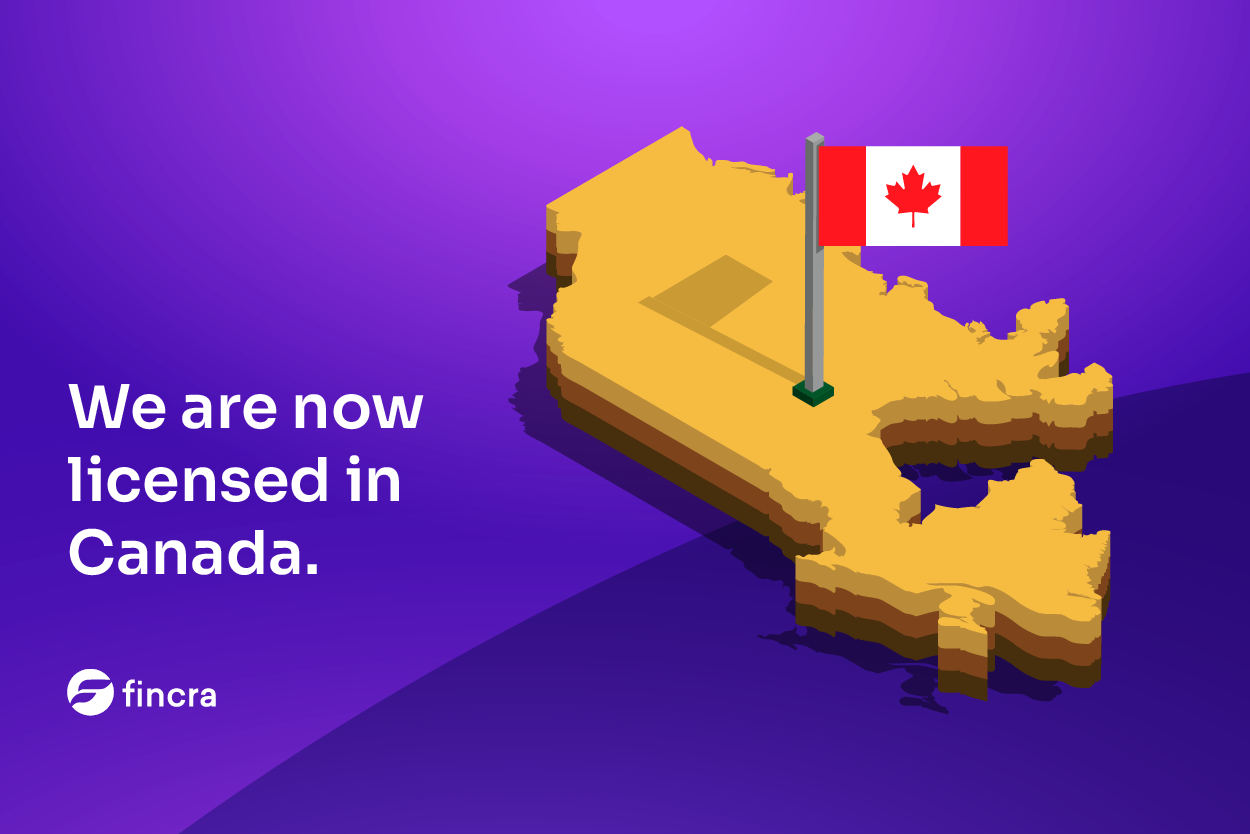
Fincra has secured a PSP licence in Canada, adding a regulated connection between Africa and one of the world's most trusted financial systems. See what this means for your business.
Internet
Starlink says Namibia’s reason for rejecting licence application is “misleading”

On March 23, Namibia’s telecoms regulator, the Communications Regulatory Authority of Namibia (CRAN), rejected Starlink's licence application. The regulator said Starlink failed three of its six requirements for radio spectrum licencing; it is also seeking 51% ownership stake in the local subsidiary.
Starlink, the satellite Internet company operating in 26 African countries, responding to the licence denial, has said that the rejection does not reflect the full picture and emphasised the regulatory and operational challenges it faces in Namibia. The Internet company launched a public all-out, urging Namibians to push for a review of what it described as a “misleading” call. The Elon Musk-owned company said it received 98.6% public support during the consultation process.
What Starlink says went wrong: In a statement released on its website, Starlink disputed the regulator’s description of non‑compliance, calling it misleading. The company says that over the past three years, it has made clear its intention to establish a local entity, comply with national security requirements, and pay all applicable taxes and fees, in line with how it operates in other markets. When Namibia cited non‑compliance as the basis for rejection, Starlink pushed back, arguing that the decision does not reflect its stated commitments.
Yet, the precedents do not help Starlink’s case. In South Africa, where authorities also demanded local ownership, Starlink’s entry has stalled; in Lesotho, a similar push for local equity ended with the government backing down in 2025 under pressure linked to a US trade deal and thousands of jobs at stake.
In that context, it is hard to take Starlink’s framing at face value. After saying it “made clear its commitment” to establish a local entity, the satellite Internet company goes on in the same statement to stress that it “has global shareholding restrictions and cannot accept local ownership.” Those two points sit uneasily together: you cannot meaningfully “establish a local entity” on the regulator’s terms if you categorically refuse local equity.
Starlink then leans on a political argument. It notes that “while Namibia’s framework encourages local shareholding, it allows for exemptions at the Minister’s discretion. In this case, an exemption was not granted,” signalling that its strategy now hinges less on meeting Namibia halfway and more on persuading the minister to carve out a special deal. It looks like a familiar playbook: reject ownership rules as a matter of global policy, then turn to public opinion and political pressure to force an exemption. It is obvious that the satellite Internet company plans to lobby hard for a Namibian licence, and it is already trying to enlist citizens’ help to get there.
While there is a broader debate over whether African regulators should insist on local ownership from foreign operators at all, Namibia’s position is at least internally consistent: the rules are clear, exemptions are discretionary, and Starlink is asking for a carve‑out it has not earned.
What Starlink is asking for now: Namibia’s regulatory framework allows the regulator to revisit its decision within 90 days, either on its own accord or if an affected party pushes for it through an appeal. Starlink is encouraging that second route by asking Namibians to request an appeal directly from the regulator.
Banking
Standard Bank processed over $9.5 trillion in 2025

Standard Bank, Africa’s largest bank by assets, is now also its biggest payments engine. In 2025, the group processed R164 trillion ($9.5 trillion) in payment flows across 2.3 billion transactions, a 9% jump from 2024 that reflects heavier use of electronic channels, instant payments, and merchant acquiring across its African markets.
State of play: Standard Bank has built out cross-border rails that now run through China’s CIPS system, allowing African clients to move money directly into the Africa–Asia corridor, and through Aroko, its blockchain-enabled settlement rail that has already handled more than R1 trillion ($58.2 billion) in flows. It has also started backing rand-denominated stablecoin and tokenised deposit experiments, signalling that it wants more of those flows to move on infrastructure it can control.
Between the lines: At the scale of payments processed, Standard Bank moved more money across its channels than mobile money platforms, including MTN MoMo, with R164 trillion ($9.5 trillion) in flows versus about $2 trillion for the entire global mobile money ecosystem in 2025. That makes Standard Bank’s R164 trillion ($9.5 trillion) one of the few visible benchmarks for bank-run payment rails in Africa and, on disclosed numbers, puts its payments engine in a different class from mobile money platforms and possibly rival banks.
Whoever controls those underlying rails has outsized influence on the cost, speed, and direction of money moving around African economies, and Standard Bank is signalling that, for now, it intends to be that control point.
Regulation
Kenyan regulator moves to revoke Standard Group’s TV and radio licences

Kenya’s media regulator is stress‑testing the country’s broadcast industry, and the results could decide who gets to stay on air. The Communications Authority of Kenya (CAK), the country’s telecoms regulator that also allocates and polices broadcast spectrum, has won a key round against Standard Group, one of the country’s largest media houses, after Kenya’s Multimedia Appeals Tribunal cleared the way for the regulator to revoke six of its licences over KES 48.87 million ($375,000) in unpaid regulatory fees.
State of play: Standard says those arrears exist because another arm of the state, the government advertising machine, owes it more than KES 1.2 billion ($9.2 million), turning what should be a straightforward compliance issue into a circular fight inside the same house.
Standard Group’s issue is not an isolated skirmish. In 2025, the regulator cancelled 75 broadcast‑related licences across TV, radio, and signal distribution, mostly for non‑compliance, signalling a much harder line in a sector long used to gentle reminders and grace periods. The formal position, now backed by the tribunal, is simple: using public spectrum is a privilege that comes with statutory obligations, and those obligations do not pause because your business model is cracking under fragmented ad revenue, audience drift to digital, and worsening liquidity. Licence fees and levies sit in one box; your cash‑flow drama sits in another.
Between the lines: The problem is that these boxes keep bleeding into each other. The same authority that is ramping up licence revocations has also ventured into editorial territory, ordering broadcasters in June 2025 to stop live coverage of anti‑government protests, a move media houses saw as a dress rehearsal for content control during tense political moments for the upcoming 2027 elections.
Standard now says it will escalate its licence battle to the High Court, triggering an automatic stay of revocation and forcing judges to revisit a familiar question from Kenya’s digital‑migration era: how far can a technical regulator go before it starts regulating speech itself? However the courts answer that question, the outcome will not just decide one company’s fate; it will set the tone for how much pressure financially stressed newsrooms can bear before enforcing order turns into thinning out the voices on air.
CRYPTO TRACKER
The World Wide Web3
Source:

Coin Name | Current Value | Day | Month |
|---|---|---|---|
 Bitcoin Bitcoin | $67,447 | - 0.28% | + 0.19% |
| Ether | $2,060 | + 0.18% | + 1.94% |
| Sky | $0.07423 | + 1.3% | + 6.95% |
| Solana | $83.19 | - 0.79% | - 5.28% |
* Data as of 06.10 AM WAT, March 31, 2026.
Opportunities
- Applications are open for ClimateLaunchpad, the world’s largest green business ideas competition run by Climate-KIC. The programme helps early-stage climate founders turn rough ideas into viable startups through training, mentorship, and pitch competitions. Entrepreneurs from around the world, including Africa, can apply for the 2026 cohort and compete for up to €10,000 in prize money and access to a global cleantech network. Apply here.
- Google for Startups: Africa, a three-month hybrid accelerator for growth-stage startups on the continent, is now accepting applications. The accelerator will provides equity-free support for the duration of the programme, mentorship, training, cloud credits, and access to Google's AI products designed to bring the best of its programmes, products, people, and technology to communities across Africa. Apply here.
- Applications are open for the 2026 FINCA Ventures Prize Competition, which offers up to $100,000 in catalytic grant funding to early-stage African startups. The programme targets founders building tech-driven solutions in financial inclusion and sustainable agriculture and food systems, with additional technical support available for selected agri-focused startups through the CLIC Connector. Shortlisted applicants will be notified in June 2026. Apply by April 10.
- Jump Shot 2026 is now accepting applications for its second edition, offering African startups a shot at $160,000 in equity-free funding. Backed by the NBPA and Mohammed VI Polytechnic University, the three-month virtual accelerator supports founders building scalable, impact-driven solutions across 12 African countries. Selected startups will gain access to mentorship, investor exposure, and partnership opportunities, with the top winner also securing access to UNGA 2026 and a US exposure trip. Apply by March 30.

- Ask an Investor: The $600 million asset manager that tracked a startup for three years before investing $1.2 million
- Follow The Money: How MTN plans to reach over ₦6 trillion in revenue by 2026
- EVs were meant to bypass oil. Now they’re stuck at the Strait of Hormuz
- AI glasses are catching on in China, from shopping to cheating
- Inside MTN’s plan to turn its towers into AI hubs
- FNB gets a new CEO
Written by: Emmanuel Nwosu and Opeyemi Kareem
Edited by: Emmanuel Nwosu
Want more of TechCabal?
Sign up for our insightful newsletters on the business and economy of tech in Africa.
- The Next Wave: futuristic analysis of the business of tech in Africa.
- Francophone Weekly by TechCabal: insider insights and analysis of Francophone’s tech ecosystem
P:S If you’re often missing TC Daily in your inbox, check your Promotions folder and move any edition of TC Daily from “Promotions” to your “Main” or “Primary” folder and TC Daily will always come to you.

How did you find today's edition of #TCDaily? |