- 👨🏿🚀TC Daily
- Posts
- Takealot and wait for delivery
Takealot and wait for delivery
Inside: Kenya's search for new tax chief begins.

Emmanuel Nwosu
April 15, 2026


Happy midweek. ☀️
In March 2013, TechCabal published its first article. Thousands of stories later, the work continues, and today, it goes deeper.
TechCabal has always been free. That's not changing.
But starting today, a new layer opens up. Reporting that goes further, built on sources you won’t find anywhere else, and told in ways we haven't tried before. You're among the first to see it.
Getting in takes less than 15 seconds.
You're one step away from the other side.
Click here to see what TechCabal 4.0 looks like and what it means for you.
—Ifeduyi

Ecommerce
South Africa’s Takealot expands international sellers to take on Shein and Temu

What happens when cheaper foreign players show up in your market and start taking your customers? You plug into their supply chain. That’s what Takealot did.
The South African e-commerce platform, owned by the conglomerate Naspers, is expanding its pool of international sellers, including Chinese merchants, and broadening supply as it tries to compete with the low prices offered by Shein and Temu. But the shift is creating problems for buyers, with longer delivery times and some listed items appearing to be knockoffs.
Between the lines: There may be a broader pattern here for how local e-commerce players are responding to the Temu-Shein threat. The Chinese e-commerce platforms have undercut them on price, and local players are now trying to respond by sourcing internationally or opening their marketplaces to foreign sellers. The challenge is that Temu and Shein already know where to source cheaply and at scale. Local players may not have the same supply-chain knowledge or market access.
What Takealot wants to achieve: By allowing more international sellers (and longer delivery times to accommodate them), Takealot is expanding its catalogue, keeping price-sensitive customers from leaving the platform entirely. This tactic is not particularly new in Africa; Jumia, the pan-African e-commerce company, is also tapping the Chinese supply chain for scale.
The trade-offs: Local sellers on Takealot are feeling pressured by foreign players on the platform, who compete with them on the same products. Chinese sellers are driving prices down, and in some cases, copying locally-made products to gain visibility and sales.
The problem with Takealot’s hybrid setup, beyond its limited supply-chain access, is reputational risk: as more overseas, including China‑based, sellers list cheap goods with long delivery times and uneven quality, customers still blame Takealot when items arrive late, fake, or poorly made. Its warehouses and courier network give it strong local reach, but mixing locally stocked products with direct‑from‑China shipments creates an uneven experience that ultimately reflects on the Takealot brand.
Temu solved this by opening a distribution hub in South Africa.
Zoom out: Takealot still ranks as South Africa’s most popular e-commerce platform, according to website ranker Similarweb; it is impressive for a market where even Amazon has a presence.
Its last reported full-year revenue in March 2025 was R14.95 billion ($872 million), increasing by 15%, yet Takealot barely returns a profit, owing to operational strain. If tapping into Chinese supply chains, where goods are cheaper, but delivery can take longer, it seems the company is comfortable enduring a few groans from customers who obviously want cheap(er) products but don't have the patience to wait.


20+ Markets. One API.

Fincra connects your business to Africa's payment rails without building market by market. For collection, payout, FX, and settlement through a single integration. See what this means for your business.
Startups
Nigerian edtech startup aptLearn shuts down

There's a kind of heartbreak you experience when you lose a first love. Your first laptop, your first GitHub repo, or the first edtech app that taught you how to write “Hello World” in HTML, long before you knew you could access Coursera courses for free. That was how some Nigerians reacted to aptLearn's shutdown on Tuesday.
What is aptLearn? Nigerian edtech startup aptLearn, an online learning platform founded in 2022 by Akinola Abdulakeem and Adebisi Covenant, has announced it will close its current platform, aptLearn 1.0, ending a four-year run. The platform will remain accessible until July 15, giving users time to complete courses and download certificates.
At its peak, aptLearn served as an accessible entry point into tech for beginners across Africa, reaching more than 200,000 learners. Several users say it was one of the first platforms they used before switching to other alternatives, a sign of how it lowered the barrier to entry.
No clear reason: The company has not given a definitive reason for the shutdown, but its messaging points to a reset rather than a full exit. In a statement shared on X, aptLearn said it “may return” with a different approach focused on making learning more accessible and flexible, with plans that involve AI-driven tools. While the language use does not inspire confidence, the startup’s X profile suggests a possible return timeline of 2028.
Between the lines: aptLearn joins a growing list of African edtech startups struggling to sustain early momentum. Nigeria’s Edukoya, once one of the sector’s most-funded players, shut down in 2025, signalling that scale, monetisation, and retention remain difficult problems to solve in digital learning across the continent.
The shift away from static course platforms is becoming harder to ignore. Edtech companies are moving towards more adaptive, interactive models that respond to how people actually learn, not just what they are taught. AptLearn’s planned pivot suggests that even early movers are rethinking their place in a market where content alone is no longer enough.
For now, users have a few months to wrap up what they started. After July, the platform goes dark, closing a chapter that helped thousands take their first steps into tech.
20+ Markets. One API.
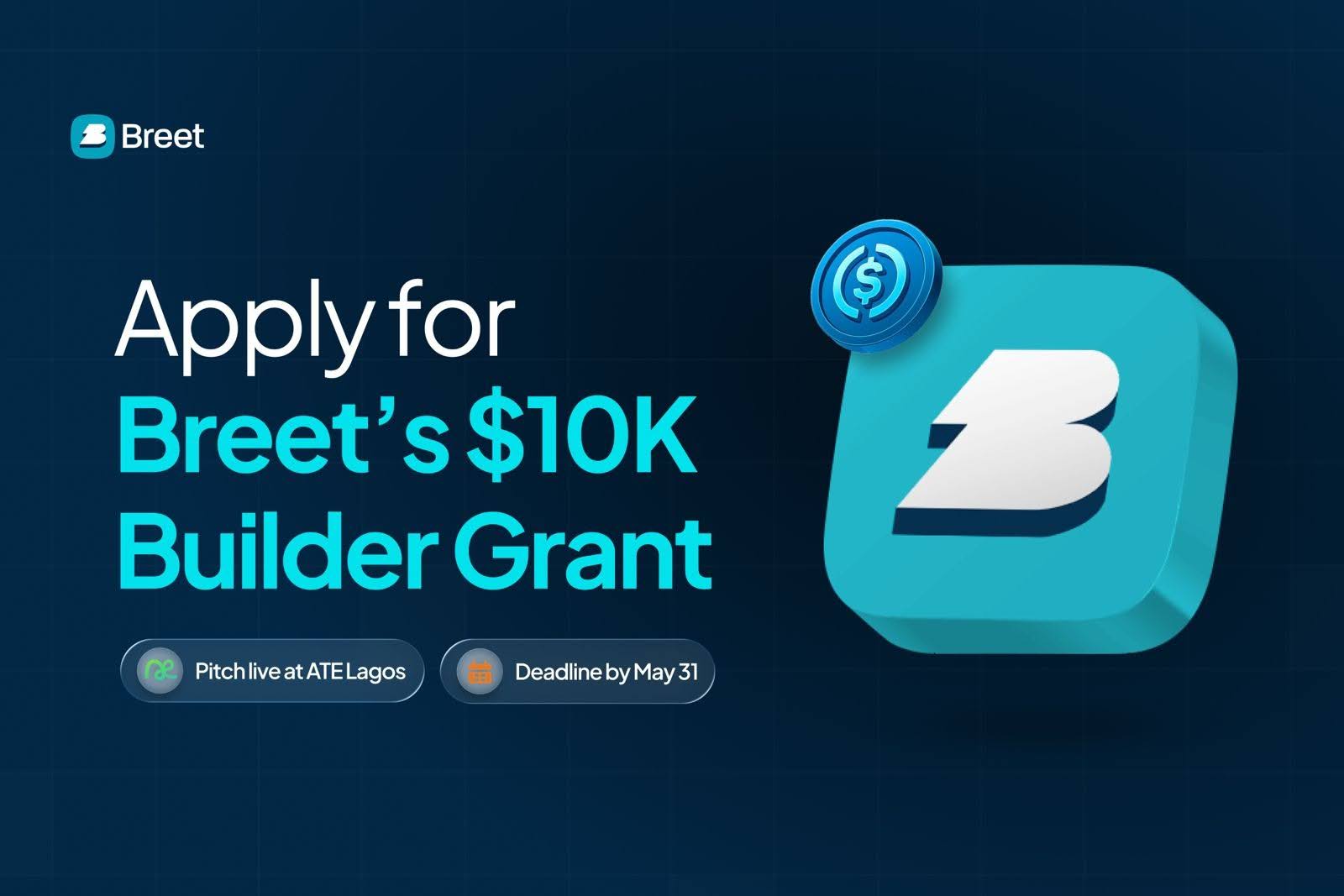
Breet is offering a $10,000 equity-free grant to growth-stage fintech, crypto and payments startups in Africa. Integrate the API, submit your product, and pitch live at ATE Lagos. Two winners get $5,000 each. Deadline by May 31. Learn more.
Government
Kenya’s search for a new tax chief begins

Exactly seven days after former tax chief Humphrey Wattanga was removed from his role in a surprise shake-up, the Kenya Revenue Authority (KRA) is now looking to permanently fill that void.
On Tuesday, the Kenyan taxman formally declared a vacancy for its top job, kicking off what is shaping up to be one of the most closely watched appointments in the country’s public sector.
One of the reported reasons for Wattanga's removal was KRA’s failure to meet its revenue targets. Another publication said the former tax chief was not doing more on the technological front to push for higher taxes despite huge upgrades. He was ousted after refusing to resign, cutting short his initial three-year tenure to 31 months.
Mixed results for revenue targets: In the 2023/2024 financial year, the agency set an initial target of KES 2.79 trillion ($21.5 billion), later revised down to KES 2.54 trillion ($19.6 billion) due to economic challenges. It eventually collected KES 2.41 trillion ($18.6 billion), missing the revised target by about KES 130 billion ($1 billion).
However, the rebound came a year later. In the 2024/2025 financial year, KRA exceeded expectations, collecting KES 2.57 trillion ($19.9 billion) against a target of KES 2.56 trillion ($19.8 billion), a 6.8% increase that suggested the taxman had found its footing again, at least briefly. Wattanga has since been appointed as High Commissioner to South Africa, in a diplomatic move by President William Ruto.
Now, the bar is even higher. As they say, the reward for good work meeting targets is more work raising targets. Kenya is targeting KES 2.97 trillion ($3 billion) in revenue for the current fiscal year following the passage of the Finance Bill in July 2025, which aims to widen the tax base, improve compliance, and squeeze more efficiency out of existing taxpayers.
Lilian Nyawanda, KRA’s Commissioner for Customs and Border Control, has stepped in as acting Commissioner General, holding the fort while the search begins.
Between the lines: The next Commissioner General inherits a tax system under pressure to digitise, expand, and deliver more revenue in an economy where taxpayers are already feeling stretched.
A likeable candidate could steady public sentiment while still getting more people to pay up, collecting more without annoying them in the process. When you need to deliver a bad message to an angry mob, you send their favourite person.
Adonijah Ndege, our East Africa reporter and Head of Life and Work Desk, predicts that the agency might likely pick an insider as Wattanga's successor.
Zoom out: Whoever gets the job will have little time to settle in. The KRA has collected KES 2.038 trillion ($15.8 billion) in taxes in the nine months to March 31; there is a KES 932 billion ($7.2 billion) gap to close in three months, and the taxman is not exactly known for patience.
Fintech
Cauridor takes its talent shopping to Flutterwave

Cauridor, the Guinean cross-border payments startup, has appointed Awa Koné, former Global Head of Operations of Nigerian fintech Flutterwave, as its Chief Operating Officer (COO). Koné will lead Cauridor’s next growth phase.
As a former fintech executive who contributed to the startup's aggressive expansion over the years, Koné is not new to navigating nuanced African markets.
Before Flutterwave, she led Swiss Re's expansion into Côte d’Ivoire, navigating a new regulatory environment and building local operations from scratch. That experience now becomes directly relevant as Cauridor pushes into similarly complex markets.
Bringing in someone who has already managed that complexity shows that Cauridor is serious about running its infrastructure reliably across markets.
Koné wanted something new: After more than five years at Flutterwave, Koné had seen what it takes to scale a payments company across continents. She described the move as a change from scaling an established platform to working on a different stage, where systems are still being designed.
For her, Cauridor offered that inflexion point: an opportunity to apply experience across operations, risk, treasury, and payments to what she called the next layer of financial infrastructure in Africa.
What to watch: Cauridor, already present in 36 African countries, is eyeing the Democratic Republic of Congo (DRC) as its next market. The next wave of expansions and steadying the ship in markets where it already has presence is where Koné will be keen on testing her pedigree.
CRYPTO TRACKER
The World Wide Web3
Source:

Coin Name | Current Value | Day | Month |
|---|---|---|---|
 Bitcoin Bitcoin | $73,919 | - 0.46% | - 0.1% |
| Ether | $2,319 | - 1.84% | + 2.84% |
| AriaAI | $0.1311 | - 82.78% | - 5.24% |
| Solana | $83.09 | - 3.08% | - 11.66% |
* Data as of 06.49 AM WAT, April 15, 2026.
Opportunities
- Applications are open for ClimateLaunchpad, the world’s largest green business ideas competition run by Climate-KIC. The programme helps early-stage climate founders turn rough ideas into viable startups through training, mentorship, and pitch competitions. Entrepreneurs from around the world, including Africa, can apply for the 2026 cohort and compete for up to €10,000 in prize money and access to a global cleantech network. Apply here.
- Google for Startups: Africa, a three-month hybrid accelerator for growth-stage startups on the continent, is now accepting applications. The accelerator will provides equity-free support for the duration of the programme, mentorship, training, cloud credits, and access to Google's AI products designed to bring the best of its programmes, products, people, and technology to communities across Africa. Apply here.

Written by: Emmanuel Nwosu and Opeyemi Kareem
Edited by: Emmanuel Nwosu and Ganiu Oloruntade
Want more of TechCabal?
Sign up for our insightful newsletters on the business and economy of tech in Africa.
- The Next Wave: futuristic analysis of the business of tech in Africa.
- Francophone Weekly by TechCabal: insider insights and analysis of Francophone’s tech ecosystem
P:S If you’re often missing TC Daily in your inbox, check your Promotions folder and move any edition of TC Daily from “Promotions” to your “Main” or “Primary” folder and TC Daily will always come to you.

How did you find today's edition of #TCDaily? |