- 👨🏿🚀TC Daily
- Posts
- Worth a MNT
Worth a MNT
Inside: Quickmart founders get a way out.

Emmanuel Nwosu
October 08, 2026

Good morning. ☀️ ️️️
Nigerians are more likely to buy event tickets a few days before the D-Day than on salary day. And the reason is not what you think.
In this episode of Headlines by TechCabal, hosts Eme Oreoluwa and Muktar Oladunmade sat with Folayemi Agusto, CEO of Tix Africa, a Nigerian-founded event ticketing platform, to discuss that behavioural pattern.
They set out to answer three questions: What does it take to pull off an ambitious event outside Lagos? Why are Nigerians spending more on educational events than music concerts? And are people more likely to buy tickets in the days leading up to an event than when their salaries arrive?
So if you’re a fan of raves, owambes (Nigerian parties), hiking clubs, or any kind of event, watch the episode.
Before you continue: We want TC Daily to be the newsletter you actually enjoy opening. What do you love, what do you skip, and what should we do more of? Tell us here. It’ll only take a few minutes.
Let’s dive in.

Read smart insights about Francophone Africa's tech ecosystem—weekly.

Fintech
MNT-Halan floats 20% of its local business arm on the Egyptian Exchange (EGX) to raise $150 million

MNT-Halan, Egypt’s first fintech unicorn, is opening its local business to public investors. Subscriptions for MNT Tech Holding for Financial Investments began on Wednesday at EGP 24.5 ($0.47) per share, valuing the company at EGP 39.2 billion ($750 million). The base offer covers 320 million existing shares, about 20% of the company, and could raise EGP 7.84 billion ($150 million). Trading is expected to start on October 20.
Explain like I’m new here: This is not a conventional capital raise. MNT-Halan’s shareholder is selling existing shares, so the initial public offering (IPO) proceeds go to the shareholder, not the listed Egyptian company. The shareholder then plans to put up to EGP 4 billion ($76 million) back into the Egyptian business through a separate capital increase. The rest will fund MNT-Halan’s Turkish operations and another acquisition.
Between the lines: MNT-Halan has fixed the price before taking orders. Investors won’t bid the stock up or down during the offer, so demand will show up in how oversubscribed the IPO becomes and how the shares trade after listing. Commercial International Bank (CIB) and London fund Redwheel have already committed up to about 39% of the base offer, giving MNT-Halan a large block of demand before the public book closes.
Why it matters: The EGP 24.5 ($0.47) offer price values MNT-Halan at about 20 times its 2025 profit, compared with 28.5 times for listed fintech Valu, the consumer lending company. The discount gives MNT-Halan’s investors some room for upside, but timing matters just as much. MNT-Halan’s founder Mounir Nakhla says the company might have raised only $30–40 million in 2024. A $150 million targeted raise could suggest investors are far more willing to back large Egyptian growth companies than they were two years ago.


Happy customer service week.

Your success and ours are the same story. Happy Customer Service Week. This year's theme is The Extra Mile, and it's the only way we know how to do this. Visit: fincra.com.
Capital market
Quickmart owners can sell another 20% stake after listing
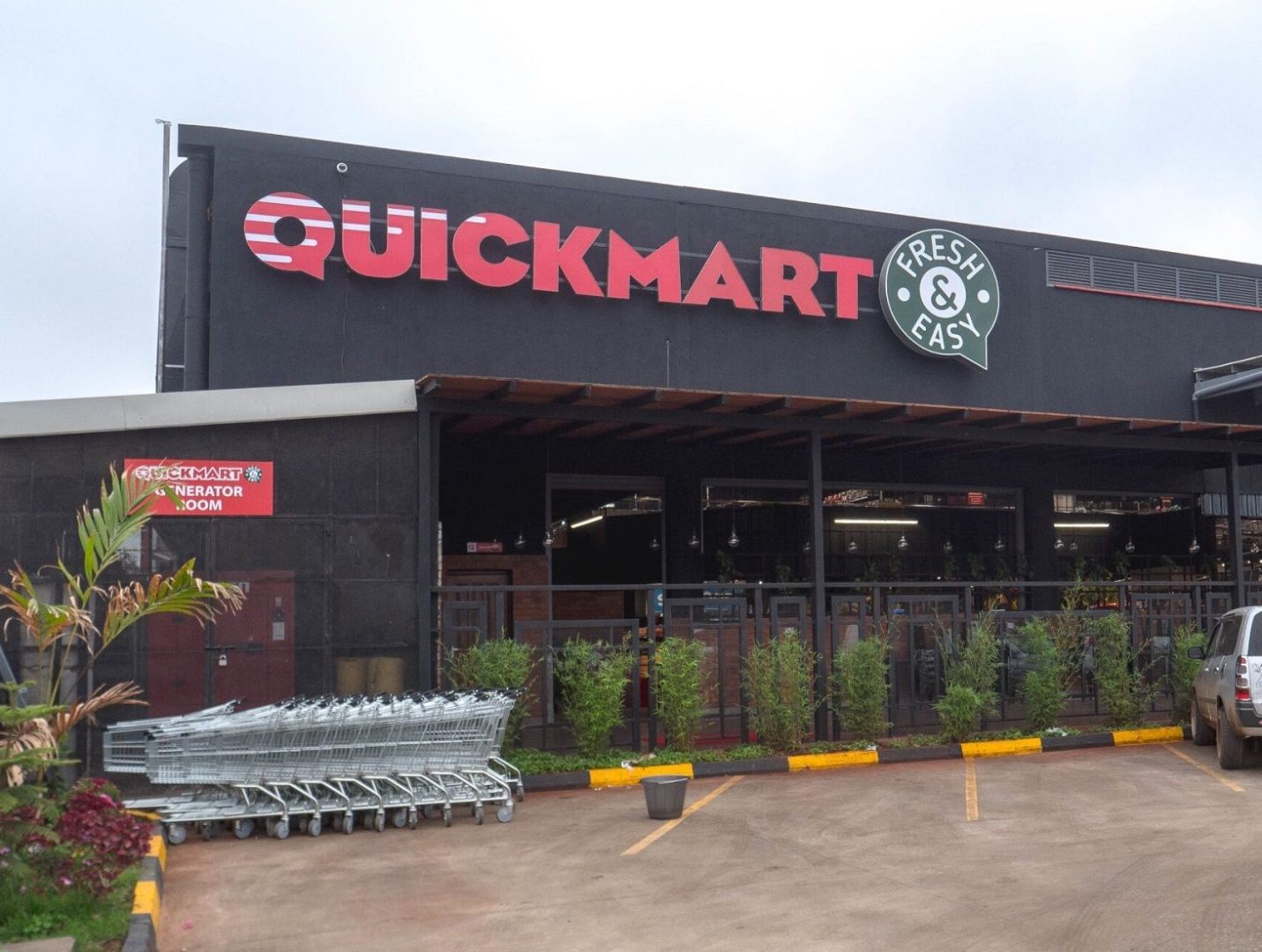
Quickmart’s owners are already selling half of Kenya’s second-largest supermarket chain to the public. They could sell much more soon after. The retailer’s initial public offering (IPO) documents show that only 60% of the shares its existing owners retain after the listing will be locked up for two years. The remaining 800 million shares, equal to another 20% of Quickmart, can be sold without waiting for that period to end.
What’s buzzing? Quickmart’s sole shareholder, Sokoni Retail Kenya, is currently offering two billion existing shares at KES 7.50 ($0.58) each. A full sale would raise KES 15 billion ($116 million) for Sokoni and leave it with 50% of Quickmart. Sokoni will retain two billion shares after the IPO. About 1.2 billion shares will be locked up for 24 months, but it can sell the remaining 800 million.
Explain like I’m new here: Lock-ups stop major shareholders from selling immediately after an IPO, reassuring new investors that insiders will keep some money in the business. Quickmart’s owners include private equity firm Adenia Partners, the families behind Quickmart and Tumaini supermarkets, and chief executive officer Peter Kang’iri. Adenia began investing in the two retailers in 2018 and merged them in 2020.
Between the lines: The arrangement gives Quickmart’s owners room to continue their exit without waiting two years. Adenia, in particular, is already eight years into an investment cycle that private equity funds typically expect to end within seven to ten years. More sales are not guaranteed, but 800 million unlocked shares create a large pool that could enter the market if owners want more liquidity.
Zoom out: Quickmart’s IPO does more than list a supermarket on the Nairobi Securities Exchange (NSE). It shows private investors that the exchange can provide staged exits, rather than forcing owners to choose between staying private and selling out completely.
Chat, pay, shop, and invest with we.yan

Chat, pay, shop, sell and invest, all in one app. That’s we.yan. You can also invest in the Dangote Refinery IPO right from the app. Open we.yan, create your wallet and CHN, and subscribe from ₦5,250. Download we.yan to get started.
Telecoms
South Africa’s new data rules are stuck in court
South African mobile users were supposed to get new rules that give them more control over their mobile data, including allowing unused bundles to roll over and stopping surprise out-of-bundle charges. But MTN and Vodacom have challenged the rules in court, putting those protections on hold.
What happened? The Independent Communications Authority of South Africa (ICASA), the country’s telecom regulator, said MTN and Vodacom’s legal action will delay its new data rules. The rules were due to take effect on January 23, 2027, but ICASA told Parliament it cannot enforce them while the court cases are ongoing.
Explain like I’m new here: ICASA published the amended End-User and Subscriber Service Charter regulations in January 2026, aiming to give mobile customers more protection over the bundles they have already paid for.
Under the new rules, operators must roll over unused data at least once after a bundle expires, without charging customers or requiring an extra step. Operators must also use the oldest bundle first and send depletion data alerts at 50%, 80%, and 100%.
Why are MTN and Vodacom fighting those rules? In July, Vodacom challenged out-of-bundle usage, bundle rollovers, bundle transfers, and the exemption of mobile virtual network operators (MVNOs). It is particularly concerned that customers who haven't opted into out-of-bundle charging could have calls cut off automatically once their bundles run out. MTN has also filed a review the same month, saying it wants the framework to be lawful, reasonable, competitively neutral, and practical to implement. ICASA accused both companies of collusion, but the regulator went back on its word in August.
What happens now? Nothing changes for you yet. The existing rules remain in place while the court process plays out. The pending rules could give users more control over unused bundles. However, before South Africans get those benefits, the courts must decide whether the rules would be upheld.
Don't miss Moonshot 2026 for anything in the world!

True scale demands moving beyond surface-level integrations to robust execution. We’ve filtered the noise out of Moonshot 2026, optimising the conference strictly for high-calibre connections between startup founders, global financial operators, enterprise leaders and individuals rewiring Africa’s technical frameworks. Join us on October 28 & 29, 2026. Get your ticket.
Space-tech
Ghana wants to create a national space agency
Believe it or not, space is becoming a big deal to African countries.
Ghana’s Cabinet has approved plans to establish a national space agency, and the government has begun drafting the law needed to create it. The new agency will grow out of the Ghana Space Science and Technology Institute (GSSTI), which currently operates under the Ghana Atomic Energy Commission (GAEC).
Explain like I’m new here: Ghana does not currently have a standalone space agency. GSSTI has led the country’s space-science work for more than a decade. It began as a centre in 2011, was officially launched in 2012, and became an institute in 2013, with a mandate to apply space science and technology to Ghana’s development.
What would the agency do? It would coordinate space activities across government, organise the acquisition and processing of satellite imagery, support research and innovation, build partnerships with private companies and international organisations, and develop Ghanaian expertise in areas such as satellite engineering, remote sensing and geospatial science.
Over time, the government also wants to build more domestic satellite capability rather than depending so heavily on third-party providers.
Why does Ghana want this now? Space in Africa, a market research company, estimates that about 300 commercial space companies across 36 African countries generated $373.35 million in revenue in 2024, with the industry projected to reach $580 million by 2030.
Space is a big deal for Africa: Nigeria’s National Space Research and Development Agency (NASRDA) has developed and launched Earth-observation and communications satellites, and uses satellite data for agriculture, flood monitoring, environmental mapping, and security. Kenya’s Space Agency runs Earth-observation programmes and is building capabilities in satellite communications and manufacturing, while Rwanda develops ground infrastructure and satellite applications in agriculture and disaster management.
Ghana’s agency would give the country a central institution to coordinate its space ambitions through GSSTI and figure out where it wants to play as Africa’s space economy grows.
CRYPTO TRACKER
The World Wide Web3
Source:

Coin Name | Current Value | Day | Month |
|---|---|---|---|
 Bitcoin Bitcoin | $84,220 | - 1.70% | + 5.43% |
| Ether | $2,618 | - 3.20% | + 4.16% |
| Doppler Finance | $0.01885 | - 6.19% | + 17.14% |
| Solana | $118.66 | - 1.16% | + 12.35% |
* Data as of 06.40 AM WAT, October 7, 2026.
Job Openings
- Bumpa — Social Media Associate — Lagos, Nigeria
- Paystack — Product Manager, Financial Systems, several other roles — Hybrid (Lagos, Nigeria)
- Paystack — Product Manager, South Africa, Account Manager — Hybrid (Cape Town, South Africa)
- Paystack — Platform Security Engineer — Nigeria, Kenya, South Africa
- Qore — Engineering Specialist, Offensive Security — Lagos, Nigeria
- OPay — PR Strategist — Lagos, Nigeria
- RadioNow — Videographer — Lagos, Nigeria
Looking for more opportunities? There are additional openings on TechCabal’s job board. We've also cleared out outdated listings to keep opportunities fresh for job seekers. If you're hiring and would like to feature an open role, please submit it via this form.

Written by: Yemi Kareem and Emmanuel Nwosu
Edited by: Emmanuel Nwosu & Ganiu Oloruntade
Want more of TechCabal?
Sign up for our insightful newsletters on the business and economy of tech in Africa.
- The Next Wave: futuristic analysis of the business of tech in Africa.
- Francophone Weekly by TechCabal: insider insights and analysis of Francophone’s tech ecosystem
P:S If you’re often missing TC Daily in your inbox, check your Promotions folder and move any edition of TC Daily from “Promotions” to your “Main” or “Primary” folder and TC Daily will always come to you.