- 👨🏿🚀TC Daily
- Posts
- YellowCard goes Swiss
YellowCard goes Swiss
Inside: Kenya is getting into cybersecurity.

Opeyemi Kareem
June 24, 2026

Get smarter about Francophone Africa with our newsletter, Francophone Weekly—the startups, tech policies, and institutions building the pipelines for ecosystem growth.

companies
Yellow Card has found a new address in Switzerland

Yellow Card, the stablecoin infrastructure company, has secured regulatory approval to operate through a supervised Swiss entity to allow financial institutions to move money into Africa and other emerging markets using stablecoins.
The idea is simple: Instead of a bank in Europe trying to figure out how to move money across dozens of African markets, it can now work with a regulated Yellow Card entity in Switzerland that connects it to those markets.
Why is this important to Yellow Card? In October 2025, the company told customers it was shutting down its retail trading business to focus on helping businesses move money across borders, settle payments, and manage treasury operations using stablecoins. By establishing a regulated presence in Switzerland, Yellow Card is positioning itself closer to the financial institutions that could become its biggest customers.
Yellow Card didn't go for the Swiss cuisine: The company's choice of Lugano is no accident. The Swiss city has spent the last few years turning itself into a destination for blockchain and digital asset companies. Through initiatives such as Plan ₿, a partnership with Tether, Lugano has explored blockchain-based public finance projects and positioned itself as a place where traditional finance and digital assets can meet.
The big picture: Yellow Card already operates across more than 50 emerging markets and counts companies like Visa, Mastercard, Western Union, Thunes, and MoneyGram among its partners. Its Swiss move signals an ambition to become the bridge between institutions looking for a regulated way into emerging markets and the businesses on the ground that need faster ways to move money.


Modern Rails for Africa’s Economy: How Fincra is helping businesses collect, pay out, convert, and settle across African markets. Read more here.
telecoms
Namibia told Starlink no. Then said no again

Namibia'sCommunications Regulatory Authority (CRAN) dismissed Starlink's appeal against its March licence rejection on Monday, confirming that Elon Musk's satellite internet company still does not meet Namibia's local ownership requirements and has now exhausted its immediate legal options in the country.
What happened? CRANoriginally rejected Starlink's applications for a telecoms service licence and radio spectrum access in March, citing non-compliance withsection 46 of Namibia's Communications Act, the provision requiring local ownership and control of licenced operators. The rejection followed a public assessment against six criteria, including competition, national security, and compliance history. Starlink failed on ownership.
Who’s benefiting? Namibians in rural and underserved areas who want affordable satellite internet and are watching their government block it on ownership technicalities. There’s a demand for Starlink; the CRAN received 624 public submissions asking the authority to reconsider.
And that’s the last of it, for now. Next door in South Africa,Starlink's path is equally blocked; the Independent Communications Authority of South Africa (ICASA) said in May it cannot implement the minister's direction without amending the Electronic Communications Act, a process that could take years. Two countries, same wall. Until Starlink restructures its local ownership or finds a compliant partner, southern Africa stays off the map.
Naira Life 2026 is here!
The theme for this year's Naira Life Conference by Zikoko is "All About Wealth."
Join 2,000+ in Lagos on August 22 for a day of practical money conversations and workshops designed to move you from simply earning an income to building lasting wealth. Get 15% off early bird tickets.
countries
Kenya just built a dedicated body to fight its 3.37 billion cyber threats

Kenya's National Assembly hasapproved the National Cybersecurity Agency (NCSA) Order, 2026, clearing the way for a standalone agency to coordinate the country's cybersecurity response. The government has allocatedKES 4 billion ($31 million) for setup and operations.
What’s the 411? Right now, Kenya's cybersecurity functions are split across multiple institutions: theCommunications Authority (CA) of Kenya, the National KE-CIRT/CC, the Kenya Defence Forces, and the National Intelligence Service. Each is handling a piece of the problem without a single body coordinating the whole picture. Think of it like having five fire stations that don't talk to each other and can't agree on who responds to which fire. The NCSA is supposed to be the central command that fixes that.
Why now? Between January and March 2026, Kenya's existing systemsdetected 3.37 billion cyber threat events and issued over 20 million advisories. Those aren't abstract statistics; they represent attacks on the mobile money platforms, e-government systems, hospitals, and telecoms infrastructure that millions of Kenyans use every day.
It’s a good year for cybersecurity: Mozambique is also fast-tracking its own national cyber strategy with Finnish support. African governments built digital infrastructure for a decade without building the defences to protect it. The reckoning is arriving, and Kenya just blinked first.

Millions of Nigerian businesses hustle from their phones without real systems. Oloja by Payxy fixes that, storefronts, payments & analytics in one dashboard. Get paid in 60 seconds. Sell like a BIG brand. Start For Free
companies
Credable removed four letters from its name. Why should you care?
Rebrands are usually an excuse for companies to unveil a new product, but Credable's rebrand is slightly more interesting than that. The fintech has officially changed its name to _able (yes, four letters lighter).
What does this company do? Imagine a telecom company or fintech wants to launch a loan product. They could spend years building the technology and risk systems needed to figure out who gets a loan, how much they get, and whether they'll pay it back, or they could call _able.
You might have used them without knowing: The company provides infrastructure that sits behind digital lending and savings products across Africa. It works with organisations including M-PESA, Airtel, Access Bank, and Diamond Trust Bank, helping power financial products used by more than 40 million customers.
So why the name change? According to them, it has outgrown its original job description. When Credable launched in 2021, it was focused on helping financial institutions determine who was creditworthy enough to receive loans. Today, it supports savings products and provides the infrastructure needed to run financial services. The name Credable was probably too tied to credit.
Other than removing four letters, why should you care? Not every fintech wants to be the star consumer-facing app. Sometimes the fulfilment is in being the technology that hundreds of financial institutions rely on behind the scenes. That's the business _able is chasing. Which means there's a chance you'll never use an _able product directly, but a loan or savings account you use one day might be running on its technology.
Showcase Your Brand at Moonshot by TechCabal

Founders. Investors. Policymakers. Enterprise leaders. Moonshot 2026 brings together the people shaping Africa’s technology ecosystem across AI, commerce, climate, enterprise, and culture. Spotlight your brand today.
CRYPTO TRACKER
The World Wide Web3
Source:

Coin Name | Current Value | Day | Month |
|---|---|---|---|
 Bitcoin Bitcoin | $62,768 | - 0.74% | - 18.81% |
| Ether | $1,671 | - 2.17% | - 20.56% |
| XRP | $1.10 | - 1.04% | - 18.70% |
| Solana | $69.78 | - 1.61% | - 18.75% |
* Data as of 07.08 AM WAT, June 24, 2026.
Events
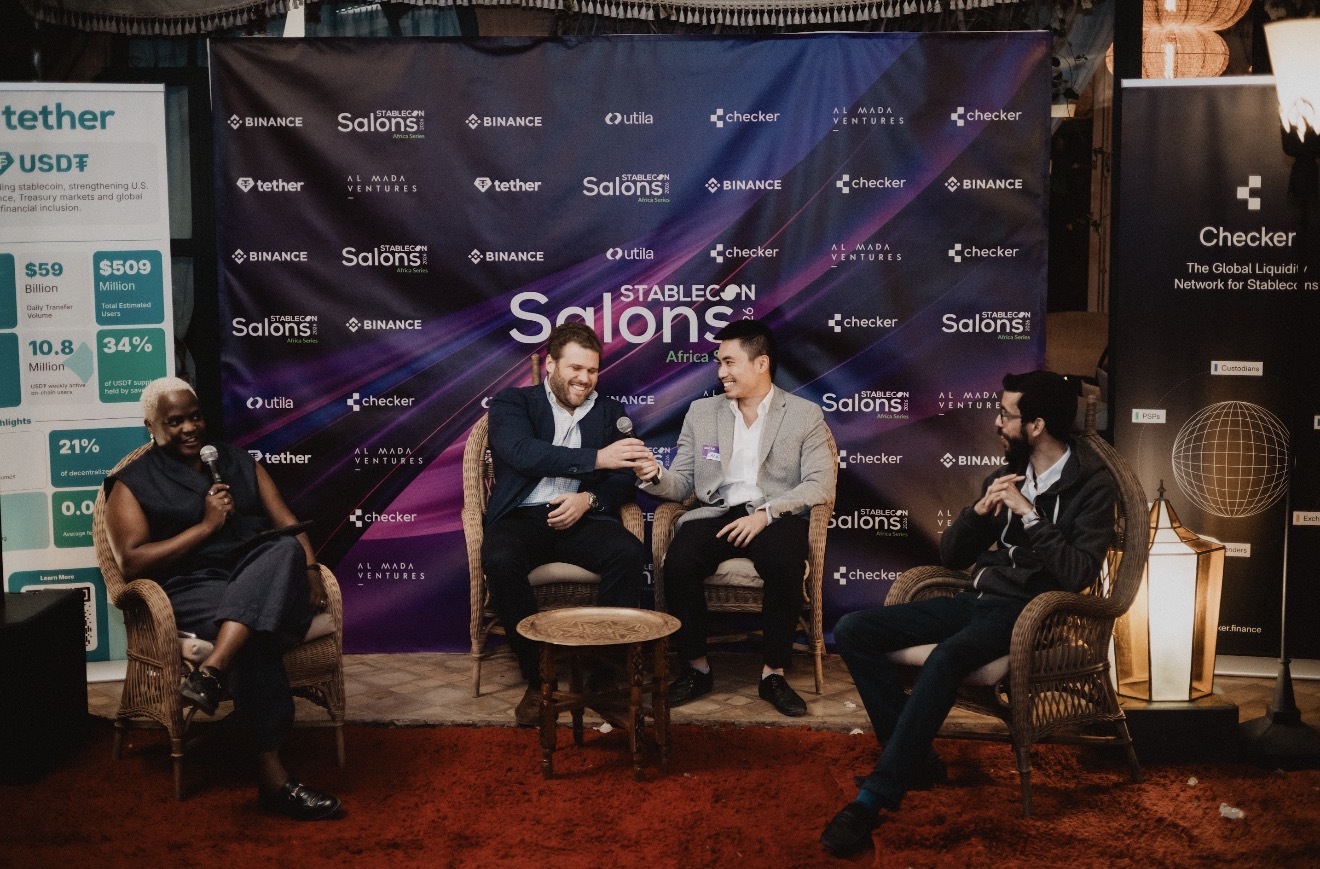 Stablecon Salon : Africa Series, hosted by Paschal Okeke, gathers Africa’s operators, builders, and policymakers across eight cities to shape the future of cross-border payments. Johannesburg is next. Register here and keep up as the journey unfolds on Substack.
 Be part of Nigeria Fintech Forum, where the entire ecosystem-banks, payments, tech, startups, fintechs, crypto, and more-come together to shape the future of finance.Our speaker/sponsor lineup includes industry giants: Flutterwave, Mastercard, Swift, NIBSS, Network International, Luno, Busha, Payaza, OADC, Equinix, Monica, London Stock Exchange and more, all under ONE ROOF, reshaping how money moves in today's digital economy. Join us on the 30th of July, 2026 at The Civic Center, VI, Lagos, Book your earlybird pass at 50% off standard price, Visit https://fintech.eventhive.ng

Written by: Opeyemi Kareem and Zia Yusuf
Edited by: Ganiu Oloruntade
Want more of TechCabal?
Sign up for our insightful newsletters on the business and economy of tech in Africa.
- The Next Wave: futuristic analysis of the business of tech in Africa.
- Francophone Weekly by TechCabal: insider insights and analysis of Francophone’s tech ecosystem
P:S If you’re often missing TC Daily in your inbox, check your Promotions folder and move any edition of TC Daily from “Promotions” to your “Main” or “Primary” folder and TC Daily will always come to you.

Did today's TC Daily help you understand something new? |